
Mounted level vials arrive as vial-and-housing components for installation on tools, instruments or machinery. An OEM order needs to define how the assembly mounts, where the operator reads the bubble and how the finished equipment will be accepted. Use this guide to prepare a sample approval plan and a production quote based on KUNYO’s published mounting options.
In this guide
Choose Mounted Level Vials for the Operator’s Task
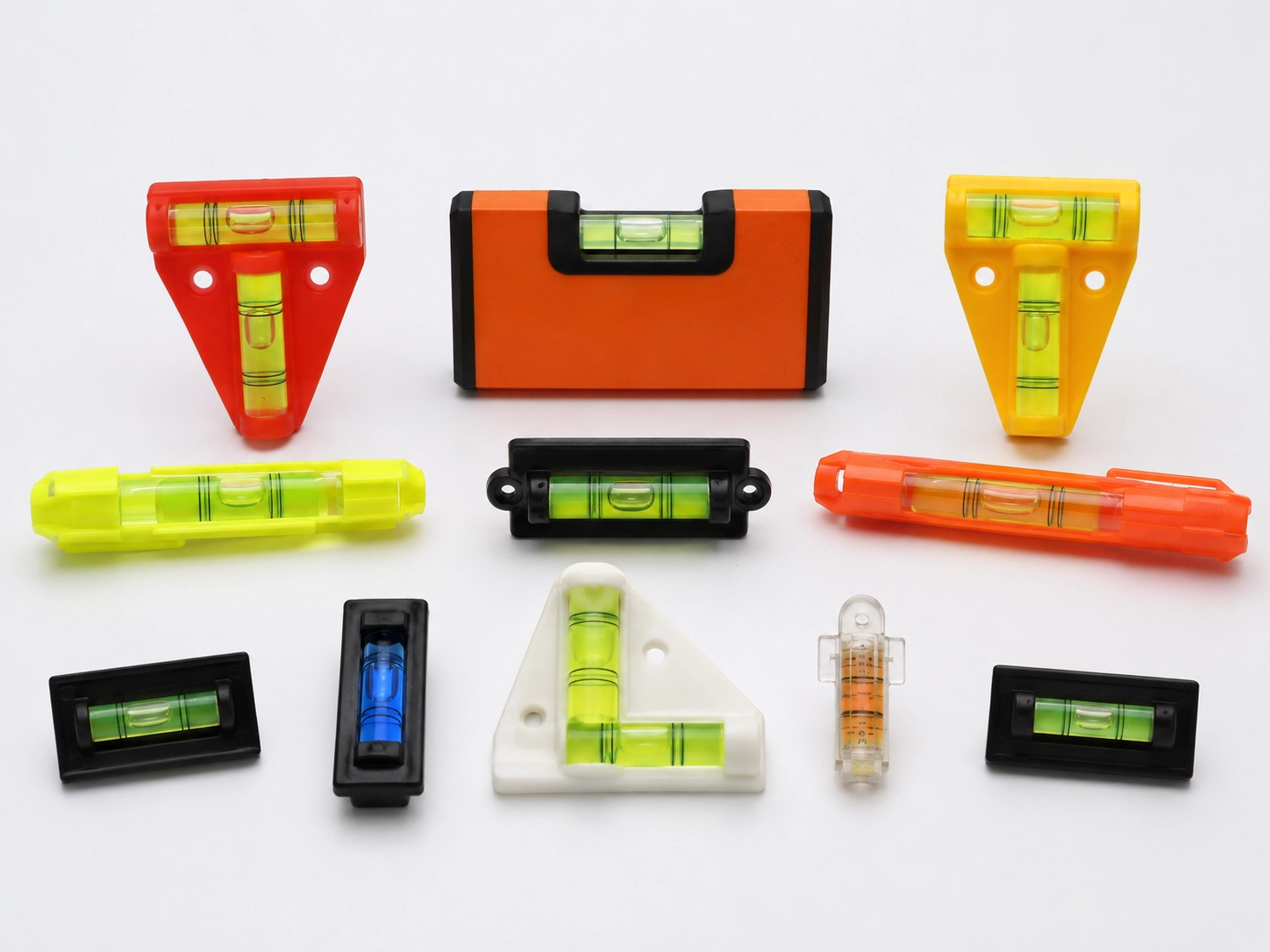
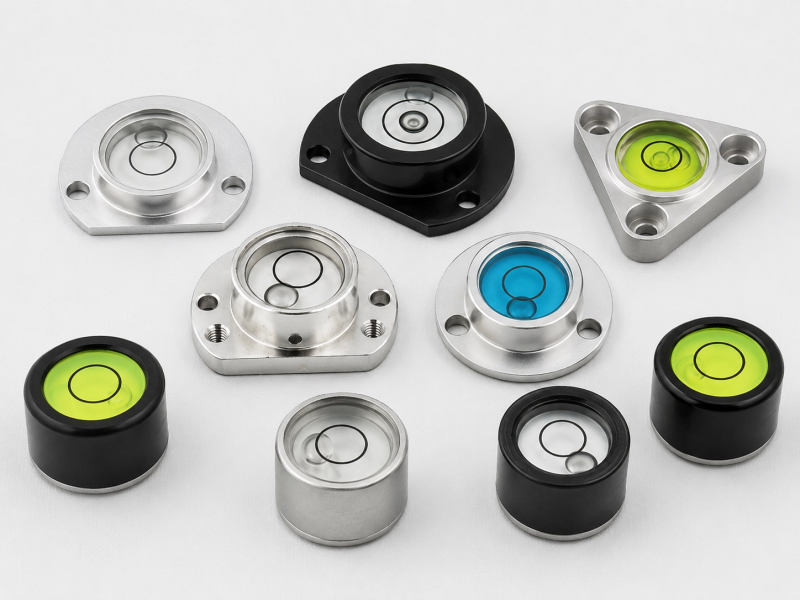
The KUNYO mounted level vials range includes tubular and circular layouts in several mounting styles. A tubular vial suits a check along one direction. A circular bullseye vial shows tilt across the horizontal plane. If the operator must read two directions individually, compare the multi-axis level indicator range and include a sketch of the readout orientation. When the equipment already includes a suitable holder, the tubular level vial range gives examples of loose vial formats to review.
For OEM sourcing, identify the surface or axis that counts as the level reference. Show the technician’s normal viewing direction and whether the assembly will be read before or after any covers are installed. Tell the supplier if the bubble should be viewed from above, from the end of a tool or through a window. Include any practical visibility requirements such as background, color and scale markings.
Put the Housing and Mounting Interface on the Drawing
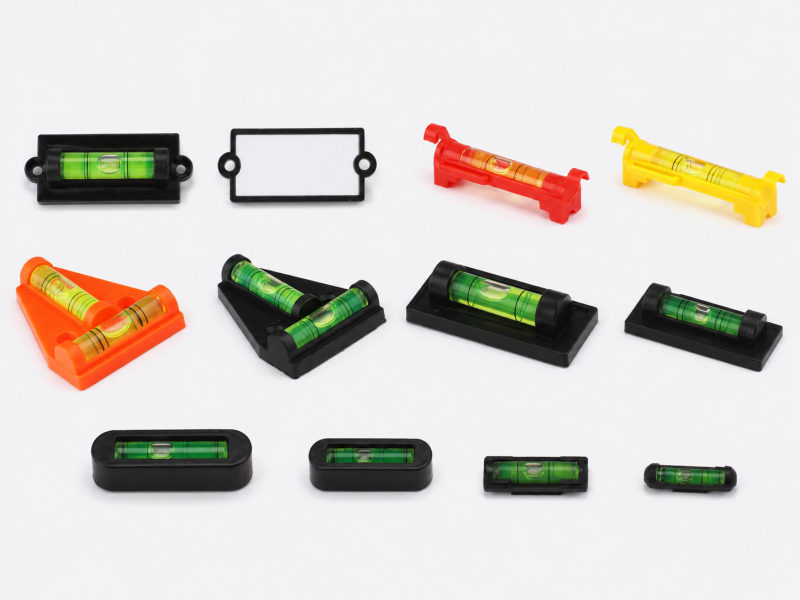
KUNYO lists screw-mounted, flange-mounted, adhesive-backed and recessed configurations. Identify the proposed mounting style for each assembly. Screw or flange mounts need the hole pattern, hole dimensions and any access limits for fasteners. A recessed assembly needs the pocket outline, depth and the location of the reference surface. For an adhesive-backed design, identify the mating surface and ask the supplier to confirm the proposed attachment for the intended environment.
On the OEM drawing, show the overall length, width and height with the maximum available clearance. Give the mounting face a clear reference and identify the relationship between the vial axis and the equipment axis. Include any restriction from handles, covers or adjacent controls. If a fastener or backing material must be supplied with the mounted level vials, place it on the purchase list so the quotation includes the agreed scope.
Specify Sensitivity and Installed Accuracy Separately
Sensitivity describes the change in inclination associated with a defined bubble movement. Ask the supplier which units and mark spacing apply to the proposed vial. The acceptance requirement for the finished equipment must also identify the mounting reference and permitted indication error. Two vials may use similar markings while requiring different validation after installation. Ask for both the component specification and the planned checks for the completed product.
As an example of industry reporting, STABILA publishes measuring accuracy for a finished spirit level alongside information about its measuring surface and vial arrangement. Use the OEM drawing to establish comparable test information for your own assembly. For a sample, agree on the fixture reference, intended mounting orientation and what the operator will record. Keep the test result with the sample and drawing revision.
Approve Housing, Markings and Readability Together
KUNYO offers acrylic and glass vial options, and lists plastic and aluminum alloy options for housings. Select the materials using the intended mounting interface and operating environment. Give the expected temperature range and describe where the equipment will be viewed. Ask for confirmation of the requested color, reference rings or scale, and include any orientation marking required to identify the correct assembly position.
A physical sample helps the OEM team review mounted level vials in the same position and viewing conditions expected in production. Check that the readout stays visible with adjacent parts in place. Compare the sample against the defined mounting interface and ask the supplier to identify any revisions after approval. If the same housing will carry several different vial configurations, give each variant a separate part number and labeling requirement.
Set the Sample and Production Quote Scope
Request sample and production quantities independently. Include the equipment drawing, hole pattern or pocket section, required sensitivity, scale and color, and an outline of the installed acceptance check. For each part, identify the proposed housing material, whether fasteners or adhesive are included and whether specialized packing or labels are required. KUNYO’s ordering FAQ explains that tooling, minimum quantities and lead times can depend on the design.
After sample approval, keep the part number and drawing revision with the test record and purchase order. An initial quote for mounted level vials should identify which design inputs are confirmed and which still need an OEM decision. If several tooling or mounting versions are being reviewed, ask for separate lines so the prototypes can be distinguished and compared on the same acceptance basis.
| Approval item | What to record |
|---|---|
| Mounting | Datum face, hole pattern or recess, orientation and assembly clearance |
| Vial response | Vial type, sensitivity units, scale and markings |
| Installed check | Reference fixture, reading orientation and acceptable indication error |
| Order reference | Approved sample, part number and revision |
Record Sample Findings for the Production Order
An approval record can cover dimensional fit, bubble response and ease of reading. A useful dimensional check compares the housing and its mounting features against the same drawing that the supplier uses. A readability check records what the operator can see in the normal equipment position, with any adjacent panels and covers in place. The indication check uses a reference and acceptance criteria agreed by the OEM. Record the result for each sample so the buyer can distinguish an acceptable housing from a fully approved assembly.
Ask the supplier to state whether the sample is a standard catalog assembly, an adaptation of an existing part or one made to a new drawing. Keep the quote matched to that scope when requesting production prices. If the approved sample includes a specific scale or marking color, carry it into the order and ask the supplier to identify the production revision. State the quantity per version and request clear labels if a shipment contains several variants.
Common Questions About OEM Vial Orders
Can a mounted vial be purchased from a photograph? A photograph helps identify the housing, readout and mounting style. Add the dimensions, hole pattern, measuring direction and the equipment reference. A technical drawing or physical sample gives the supplier a better basis for confirming the design, especially if the housing must fit a restricted space.
How should I specify a recessed housing? Show the pocket in section and give the plan dimensions, depth, clearances and intended mounting reference. Indicate where the operator will view the vial. Ask the supplier to flag any point where the proposed housing would extend outside the available envelope or interfere with nearby equipment.
Can I reuse an approved housing with a different vial? Treat the new vial as a separate configuration. Share the original housing drawing and specify what changes in the vial material, scale, color, reading direction or response. Ask the supplier to identify the changed features and confirm which checks should be repeated on a sample of the proposed part.
What if the prototype uses a different mounting reference from the production unit? Document both locations and tell the supplier which one governs approval. Recheck the finished assembly on the production reference where feasible, and keep the result with the accepted part number. A valid component drawing and an installed check answer different questions, so the purchase record should retain both.
What should the production quote list? Ask for the quoted assembly configuration, sample status, quantities, lead time, packaging and any included mounting items. If separate versions are being compared, ask for pricing by part number and drawing revision. Make clear which sample is approved for production and which options remain under review.
For equipment sold in several variants, define which versions share the same leveling requirement. A change to the base or enclosure can change the mounting reference or limit visibility even if the vial assembly stays the same. Include the variant identifiers in the acceptance record so the approved sample can be traced to the equipment versions it covers.
Request a mounted level vial quote with your drawing, mounting method, sensitivity requirement and planned quantity.