
PTFE industrial gaskets are purchased for specific sealing interfaces, from rectangular gauge plates to circular viewing windows. A useful drawing identifies the opening, the sealing profile, the finished thickness and the grade to be supplied. Use this guide to prepare a line-by-line gasket RFQ for maintenance, spares or OEM production, based on KUNYO’s published product drawings and ordering information.
In this guide
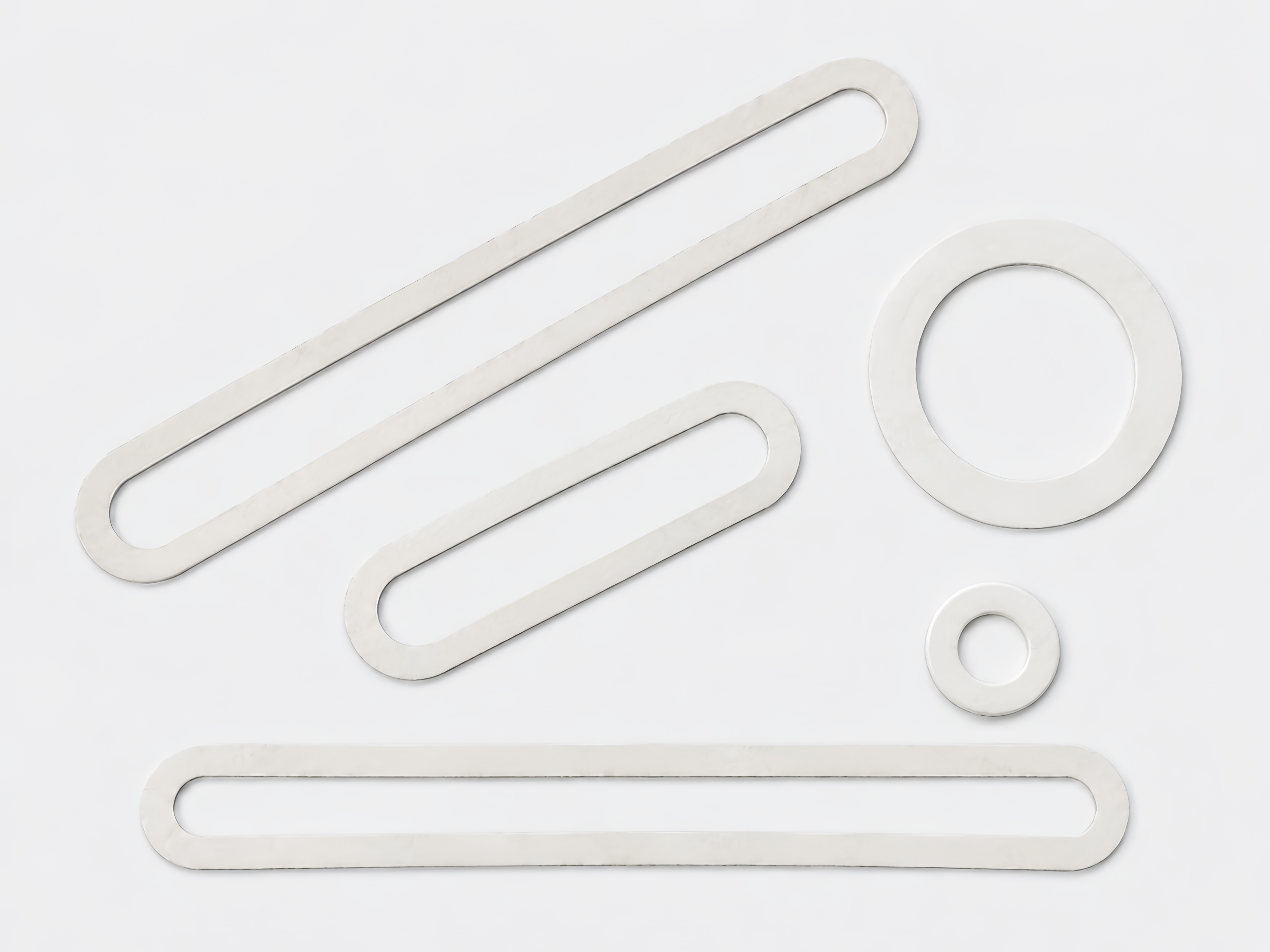
Match PTFE Industrial Gaskets to the Sealing Interface
The KUNYO PTFE gasket range includes rectangular profiles for reflex and transparent gauges, ring gaskets for circular sight glasses and custom designs. Start with the gauge or sight-glass model. Identify the original gasket code and the position of the gasket in the equipment. Where the assembly uses multiple layers, show their positions in the parts drawing and identify which layers are included in the quote.
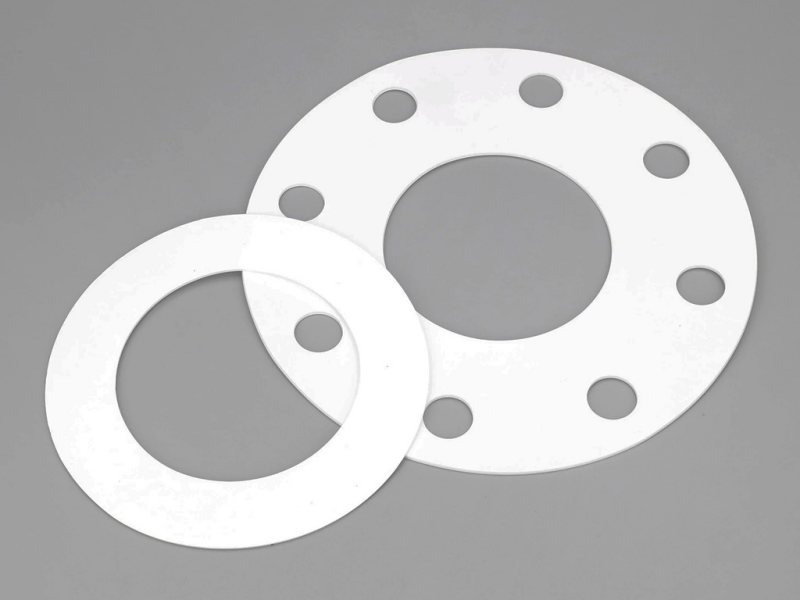
A transparent gauge glass and a borosilicate sight glass disc illustrate different mounting geometries. The flat plate typically calls for a rectangular profile, while the round disc calls for the ring geometry shown in the holder drawing. For either style, mark the sealing face and confirm the shape of the clear opening. For PTFE industrial gaskets with special cutouts, give the drawing revision and label the shape and location of each feature.
Read the Type A and Type B Drawings Carefully
KUNYO’s table separates overall length L, width B, thickness S and opening length C. Its standard PTFE industrial gaskets include Type A and Type B layouts. For example, GA05 and GB05 both have an overall length of 220 mm. GA05 has a published width of 30 mm and an opening length of 204 mm. GB05 has a width of 34 mm and an opening length of 200 mm. Both show more than one permitted catalog thickness option for quotation.
Use the table to identify the candidate code, then compare it against the approved assembly drawing. List the specific thickness for the order. For a round gasket, record OD and ID separately. For a custom profile, show radii, hole positions, slots or other features using a defined drawing reference. Include tolerances for dimensions that affect the fit in the equipment rather than relying on a catalog label alone.
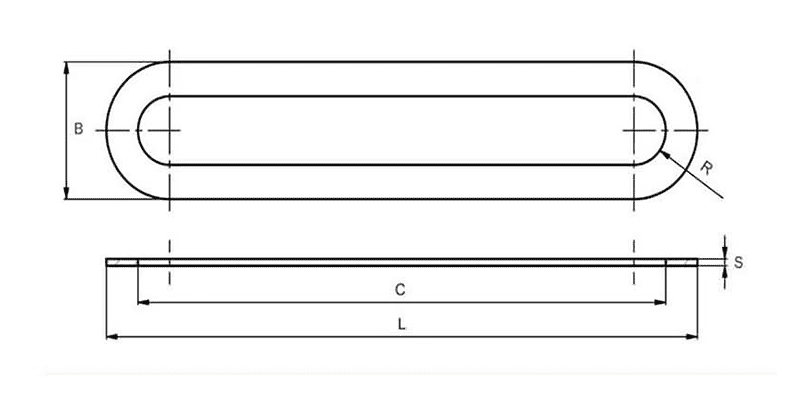
| Catalog example | Length L | Width B | Opening C |
|---|---|---|---|
| GA05 | 220 mm | 30 mm | 204 mm |
| GB05 | 220 mm | 34 mm | 200 mm |
Confirm Material Grade and Operating Conditions
Virgin PTFE is the grade shown on KUNYO’s product page. If your equipment calls for another grade or a specific material declaration, state the requirement in the quote request. The grade, process medium, cleaning conditions, pressure and temperature should travel together on the application record. A catalog temperature figure is conditional, and the complete sealing arrangement must be reviewed for the actual application.
For industry context, Garlock’s GYLON documentation describes a different PTFE gasketing family designed to address creep relaxation. Its specifications belong to that product family. When comparing virgin PTFE and any proposed alternative, ask the equipment owner to review the exact material and joint conditions. If the process has hygienic or food-contact requirements, request documentation for the grade offered against your applicable requirements.
Keep Seal, Cushion and Protective Layers Distinct
The equipment may use several parts around a gauge glass, including a sealing gasket and separate cushioning or protective elements. Ask the supplier to quote each item by its own drawing and material. For PTFE industrial gaskets purchased with related parts, use an item list showing where the component goes and what it contacts. The drawing should identify the complete stack where that information is needed to confirm compatibility.
When replacing a gasket from an existing assembly, send the approved drawing or parts list if available. A removed gasket may have changed shape or thickness in service. Treat measurements from that part as supporting identification and ask the equipment owner or supplier to confirm the intended new-part dimensions. If you need to buy a second sealing material for a different gauge, create a separate item rather than grouping both requirements under one description.
Approve the Drawing, Quantity and Identification
For a repeat order, identify the previously approved gasket drawing and grade, and point out any changes separately. For a new profile, ask whether a sample is available and agree on the dimensions to check at approval. Keep the supplier’s drawing revision, part number and any approved sample reference on the purchase order. Use the same references when the goods arrive so the inspection can identify each gasket without comparing superficially similar shapes by eye.
For PTFE industrial gaskets quoted in several sizes, state the piece count for each part and request separate labels based on the RFQ line. List any requirements for dimensional reports, material declarations or packaging. Add the delivery country and expected order date. The KUNYO ordering FAQ explains how approved drawings and samples can be used as production references.
Make the Commercial Quotation Comparable
Provide suppliers with the same drawing revision and requested quantities for PTFE industrial gaskets. Ask the quote to distinguish a standard part from custom cutting, and request separate prices for any sample, tooling or inspection documentation. If the supplier suggests changing the profile or tolerance, ask for that proposal on a separate line. This lets the buyer see where offers vary and lets the equipment engineer review the exact change before approval.
For a maintenance purchase with several gasket sizes, share a schedule that links each item to the equipment tag or service location. Ask for the actual lead time by item and clarify whether partial shipments are acceptable. If the order covers more than one grade, request separate packaging identification so the parts can be assigned to the right stock bin. State any delivery date or packaging constraints in the initial request so they can be reflected in the quote.
Common Questions About PTFE Gasket Procurement
Can I use the glass size as the gasket size? The glass designation helps identify the assembly, but the gasket drawing determines its sealing outline and opening. Compare the exact gasket code and drawing against the equipment parts list. The published Type A and Type B examples show why matching the length alone can leave the width and opening unresolved.
What if I only have the old gasket? Send photos, equipment information and any remaining part markings. Identify approximate dimensions and show where the sample was installed in the assembly. The buyer should confirm which dimensions represent the intended new part, since a gasket that has been in service may no longer match its original shape. Ask whether a clean reference sample or approved equipment drawing is needed.
Can the order include PTFE rings and rectangular gaskets together? List each profile separately with its inside and outside dimensions or shape drawing, material grade, thickness and quantity. Confirm that the supplier will label the pieces by part number and drawing revision. Keep the gasket for each piece of equipment traceable through the order and into stock.
Which inspection documents should I request? Specify the documents your receiving process actually requires, such as a dimensional report for selected features or a declaration for the quoted material grade. State the document requirements before pricing and agree on the acceptance criteria for custom cutouts. For an approved sample, store the drawing revision and sample record together so the next order can use the same reference.
Can a proposed alternate grade be approved with the same drawing? Use a separate material line on the quote and ask the equipment owner to review the grade against the original application. Once approved, record both the final material designation and drawing revision. This matters when several visually similar gaskets are used in different services.
When consolidating purchasing across several sites, retain the equipment model and approved gasket reference for each location. Identical-looking profiles can have different opening sizes or material requirements. A site-by-site cross-reference lets the buyer combine truly equivalent purchase lines while keeping the plant’s maintenance records clear.
Request a PTFE industrial gasket quote with your gasket drawing, equipment reference, required grade, operating conditions and quantities.