
An oil sight glass plug sample lets an equipment buyer confirm the port connection, sealing arrangement and window layout before ordering production quantities. Use these checks for threaded sight windows on gearboxes, reservoirs, pumps or hydraulic equipment.
In this guide
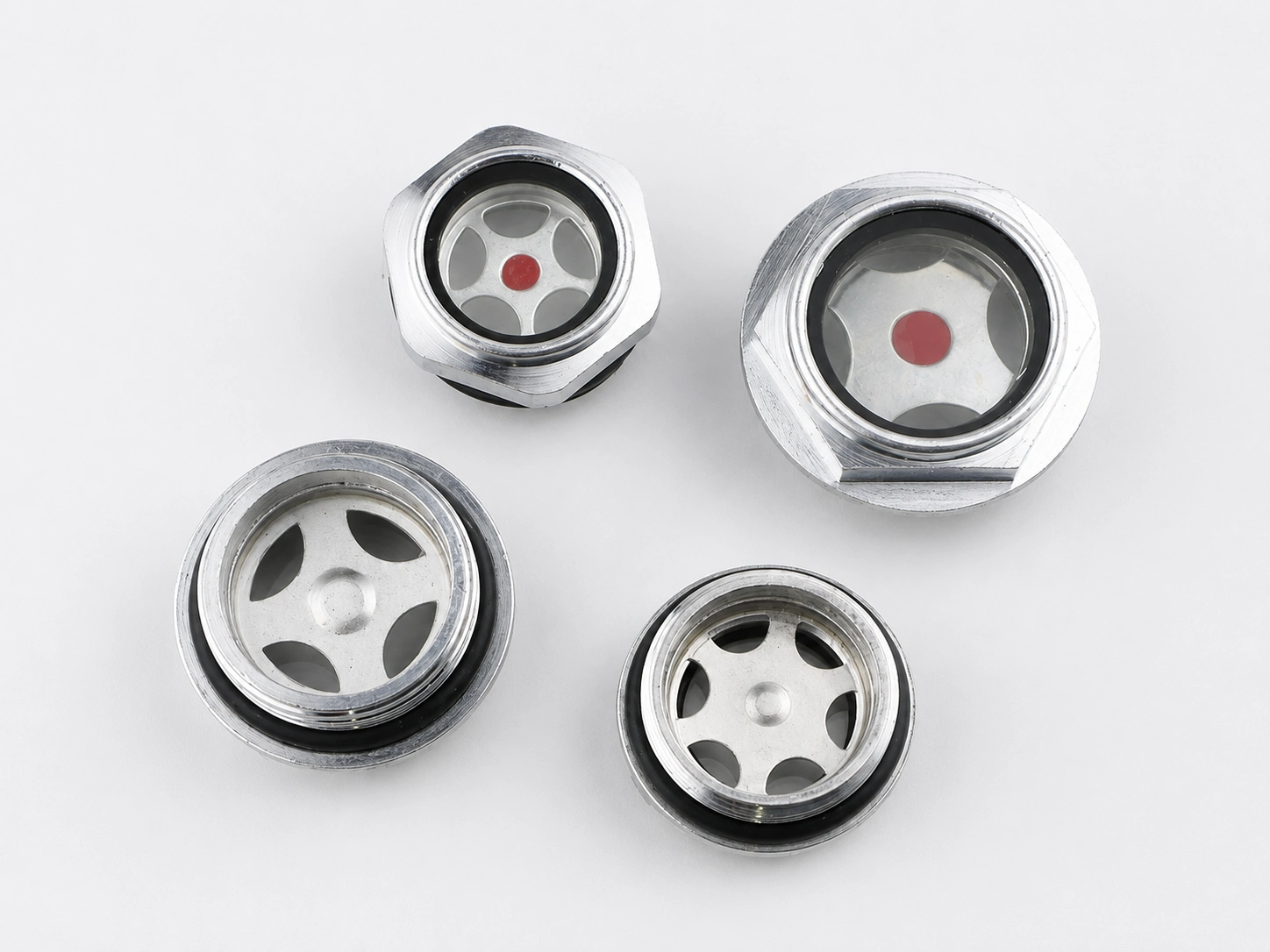
1. Label the oil sight glass plug sample by port
Identify the equipment model, the port shown on the drawing and the original part number. If several ports use similar-looking windows, give each sample its own label and photograph. Show the threaded end, the sealing surface and the front window in the request so each view can be traced to the correct part.
KUNYO lists BSP parallel, NPT and metric connections. Record the full designation from the equipment drawing, including pitch where applicable. Use the drawing or an approved reference when the thread is unclear. A photograph can help identify the part and gives the supplier a reference for follow-up measurements.
2. Record viewing diameter and fit dimensions
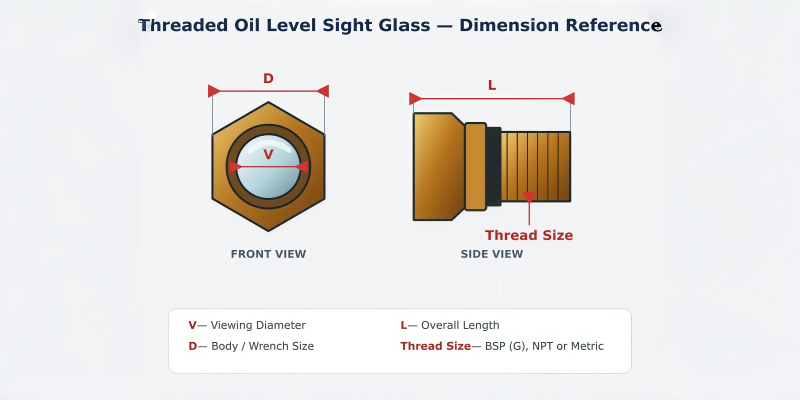
Ask for the drawing that corresponds to the proposed oil sight glass plug sample. KUNYO’s size tables distinguish viewing diameter V, body or wrench dimension D and overall length L. Compare those three values with the space available in the equipment and the viewing area required by the operator.
The catalog lists G1/2 with a 9–12 mm viewing diameter and M20 × 1.5 with a 7.5–10 mm viewing diameter. These values describe different catalog connections. Keep the measured viewing area, body clearance and connection designation together on the sample record.
| Connection | Viewing diameter V | Body size D |
|---|---|---|
| G1/2 | 9–12 mm | 27 mm |
| M20 × 1.5 | 7.5–10 mm | 24 mm |
3. Put the sealing components on the sample record
State the seal arrangement from the original assembly drawing. Ask the supplier which seal is included with the sample, and record the body, window and sealing materials as separate fields. KUNYO lists brass, aluminum alloy, stainless steel and plastic bodies, with several glass and seal options available for review.
The catalog includes NBR, FKM, PTFE and copper options. Share the lubricant, pressure and temperature so the proposed combination can be reviewed for the equipment. Request confirmation for the complete assembly and proposed conditions before releasing the sample for service.
4. Confirm what the operator should see
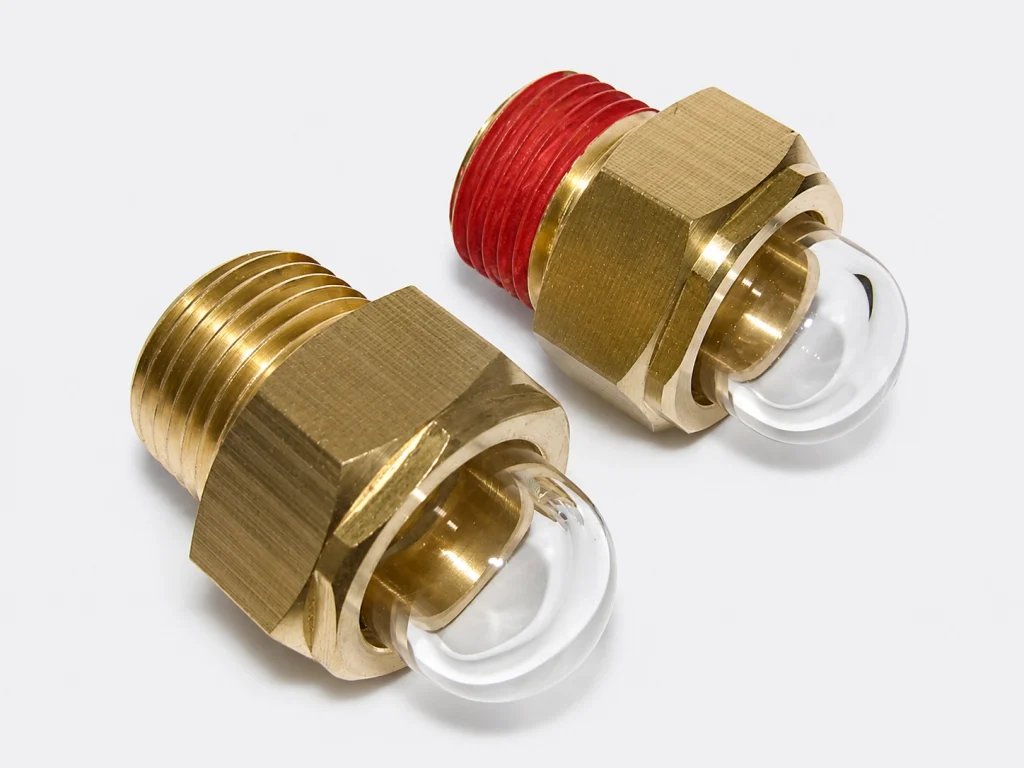
Use the oil sight glass plug sample to confirm window visibility at the equipment’s intended viewing position. Identify whether the window will display a lubricant level, or whether observations such as foam and discoloration are also part of routine inspection. Include the intended viewing direction and any restrictions around the port.
KUNYO offers versions with an internal reflector for applications where contrast helps make clear or light-colored oil easier to see. Record the reflector decision with the window specification so the production order follows the sample that was reviewed.
5. Request the sample and bulk quote together
Ask the sales team for sample terms, minimum order quantity, bulk pricing and estimated delivery for the same drawing revision. Include the delivery country and separate the sample quantity from the expected production quantity. For each item, ask what is supplied with the viewing assembly and request the current drawing.
After approval, retain the oil sight glass plug sample reference alongside the quotation and purchase order. For repeat orders, send the approved part reference and identify any changes to the lubricant, port or service conditions before the supplier confirms the next batch.
Product references: KUNYO Oil Sight Glass Plug specifications and KUNYO ordering FAQ. Related reference: ASME pipe thread standard.
Request a quote. Send the drawing or equipment reference, dimensions, operating conditions, quantity and destination to sales@kunyoindustrial.com or use the KUNYO inquiry form.