
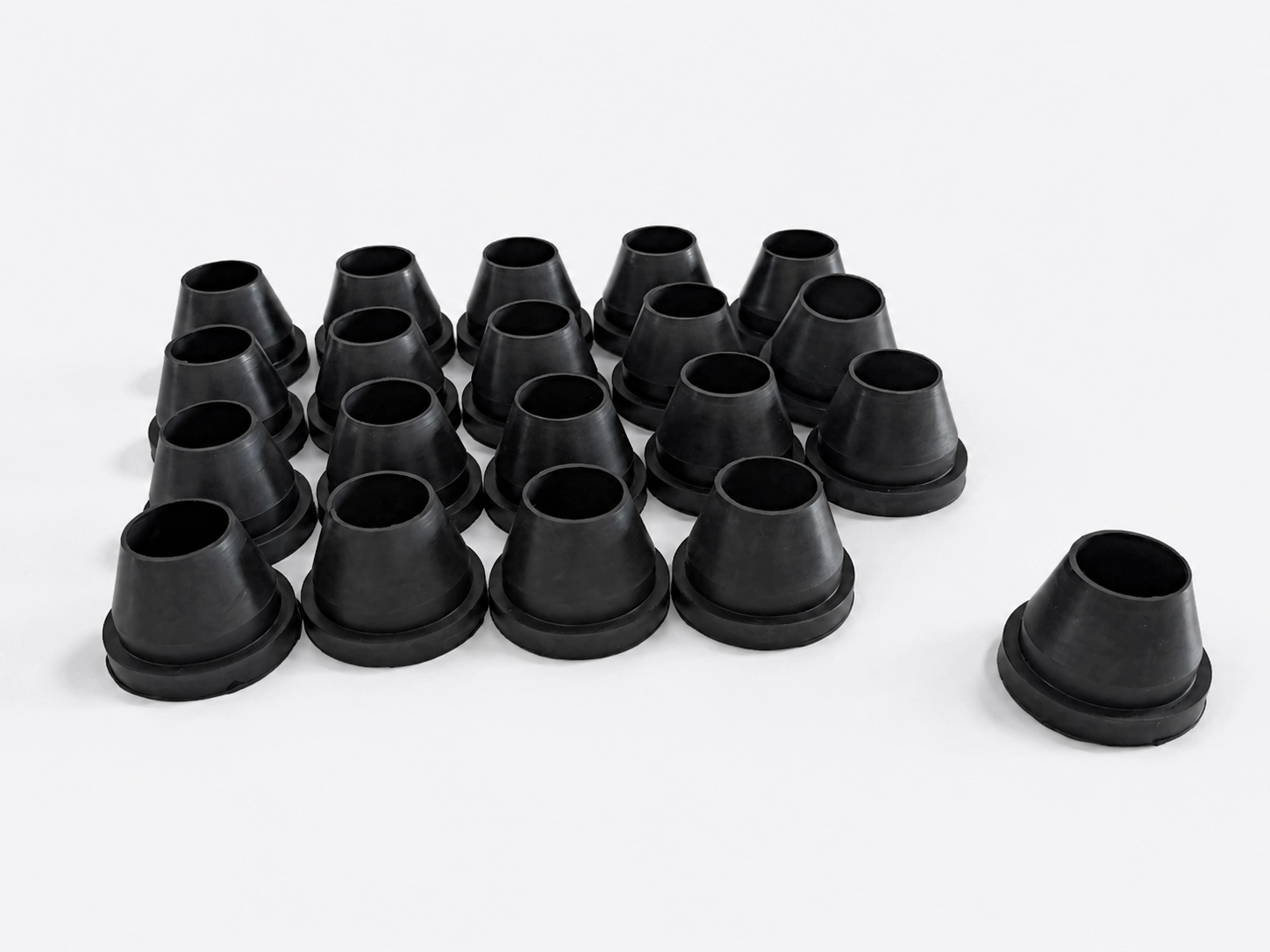
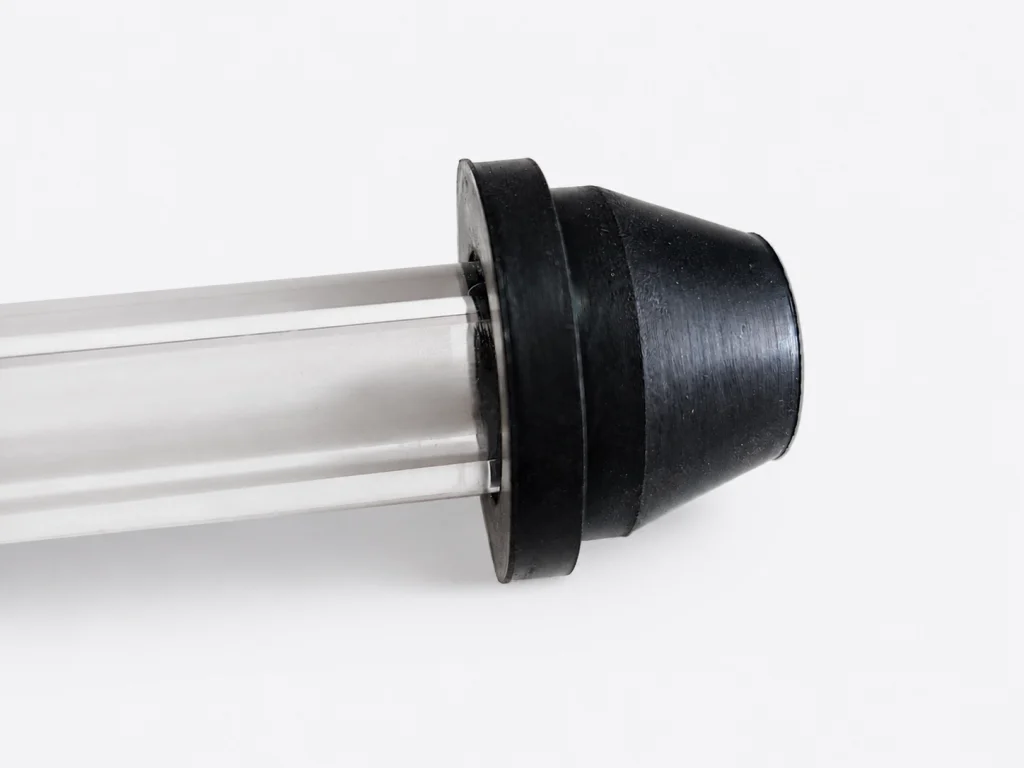
Rubber cone packing fits around the glass tube at the connection of a tubular liquid level gauge. Use the KUNYO RC01–RC04 references below to start a replacement inquiry. Confirm the tube outside diameter, gauge mounting size and seal compound against the equipment details before placing the order.
In this guide
1. Match the rubber cone packing code to two dimensions
Start with the tube outside diameter and nominal gauge mount. KUNYO lists RC01 for a 3/4-inch mount and an 18–19 mm tube, and RC02 for a 3/4-inch mount and a 15–16 mm tube. Both RC03 and RC04 list a 12–12.5 mm tube. RC03 uses a 3/4-inch mount, while RC04 uses a 1/2-inch mount.
Include the two dimensions on every inquiry line. If the original packing has no label, include photographs of the seal profile, tube and fitting, as well as any original equipment identification. Ask KUNYO to confirm which catalog code or custom profile best matches the drawing.
| Catalog code | Gauge mount | Glass tube outside diameter |
|---|---|---|
| RC01 | 3/4 inch | 18–19 mm |
| RC02 | 3/4 inch | 15–16 mm |
| RC03 | 3/4 inch | 12–12.5 mm |
| RC04 | 1/2 inch | 12–12.5 mm |
2. Compare the cone profile using the catalog drawing
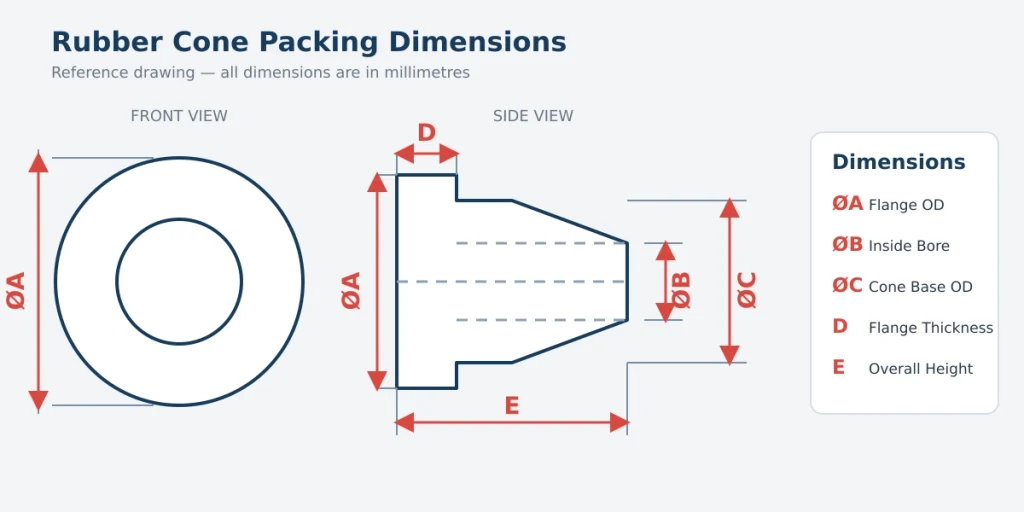
Find the drawing on the rubber cone packing product page and use its dimension labels when recording the part. In that drawing, RC03 has a listed ØA of 33.15 mm and E of 23.25 mm. RC04 lists ØA of 28.80 mm and E of 17.50 mm. These dimensions help distinguish the two catalog shapes for the same tube outside diameter.
For custom profiles, send the opening and outside dimensions, overall height and taper details where available. Identify the location of each measurement on a marked photograph or drawing. If the removed seal is worn or compressed, give the supplier the equipment drawing or a known reference sample to support the match.
3. Include the compound and service conditions
KUNYO lists EPDM as the standard rubber cone packing material, with NBR, silicone and FKM options. Its product information describes EPDM for water and hot-water applications and identifies NBR as an option for oil service. Record the exact fluid or lubricant and ask for the proposed compound against your actual application.
Include normal and maximum operating temperatures and pressure. Ask the gauge manufacturer or responsible engineer to confirm the complete assembly for those conditions. The packing code defines a catalog profile, and the quotation should identify the compound and hardness applicable to that part.
4. Use one quotation line for each packing configuration
Write each line with the gauge model, packing code if known, tube outside diameter, gauge mounting size, compound and piece quantity. When ordering for multiple gauges, identify each equipment position in the request. If the scope includes replacement glass tubes, add a separate line with the tube size and reference.
For a rubber cone packing sample, ask the supplier to label the confirmed code and material on the sample record. Keep that information with your approved drawing or purchase reference. For a repeat order, include the last order number, required quantity and destination so the quotation can reflect the configuration you approved.
For a mixed order, list the quantity by individual seal code and material. For example, specify RC03 and RC04 on separate lines even when both gauges use the same glass tube outside diameter. Include the mount size on each line so purchasing staff and receiving inspectors can compare the delivery with the approved quote.
Product references: KUNYO Rubber Cone Packing specifications and KUNYO ordering FAQ. Related reference: Parker elastomer compatibility handbook.
Request a quote. Send the drawing or equipment reference, dimensions, operating conditions, quantity and destination to sales@kunyoindustrial.com or use the KUNYO inquiry form.