
A gasket cut to the right shape can still fail to meet the purchase specification. When we review industrial gasket paper at KUNYO, we check the material form, thickness and application together. “Gasket paper sheet” describes a supply form; it does not identify the grade or establish that the material suits your joint.
We supply fiber-and-latex gasket paper in vulcanized and non-vulcanized forms, with sheet, roll and finished-part options. This guide brings the main selection questions together so equipment buyers, gasket converters and distributors can send a complete inquiry rather than compare loosely specified materials.
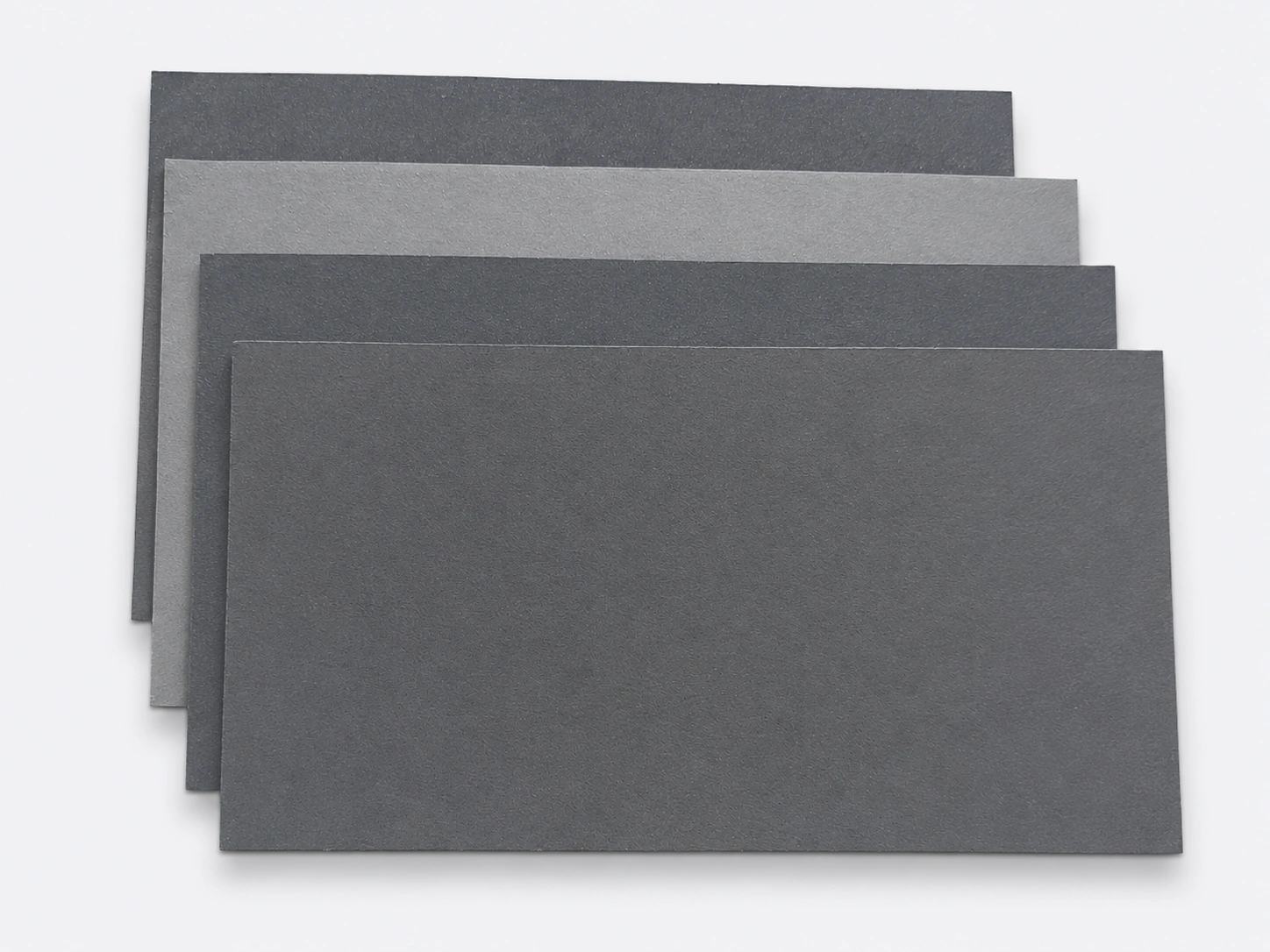
What is industrial gasket paper?
Our listed product is a flexible sealing material made from selected fibers, synthetic latex binder and fillers. It is also described as latex gasket paper or beater-addition gasket sheet. It is intended for defined sealing components and further processing, rather than being interchangeable with ordinary paper or every industrial gasket sheet.
Typical applications listed in our range include engine covers, oil pans, gearboxes, pumps and machinery. These are application families, not automatic approval for every component within them. We ask what the actual part does, which medium contacts it and which equipment specification the purchase must follow.
For background, Allstate Gasket describes a specific beater-add gasket paper grade made with a fiber-and-latex construction. Supplier grades can differ. We use the named grade and its documentation as the comparison reference, rather than assuming that all products bearing the same general name have identical properties.
Industrial gasket paper types: vulcanized or non-vulcanized?
| Selection point | Non-vulcanized type in our range | Vulcanized type in our range |
|---|---|---|
| General surface description | Softer, paper-like | Smoother and denser |
| Processing question | Is further lamination specified? | Is direct cutting into finished gaskets specified? |
| Purchase reference | Approved layer or material specification | Approved material and finished-part drawing |
| What remains essential | Grade, thickness, medium and service conditions | Grade, thickness, medium and service conditions |
We ask whether your process needs raw material for a composite construction or paper to cut directly into a gasket. If the part is laminated with metal or another layer, state the entire construction and identify whether the quoted thickness belongs to one layer or the finished composite.
Do not treat “vulcanized” as a universal performance ranking. The required grade and finished construction still matter. Our vulcanized and non-vulcanized paper comparison covers that narrower choice when you already know the supply task.
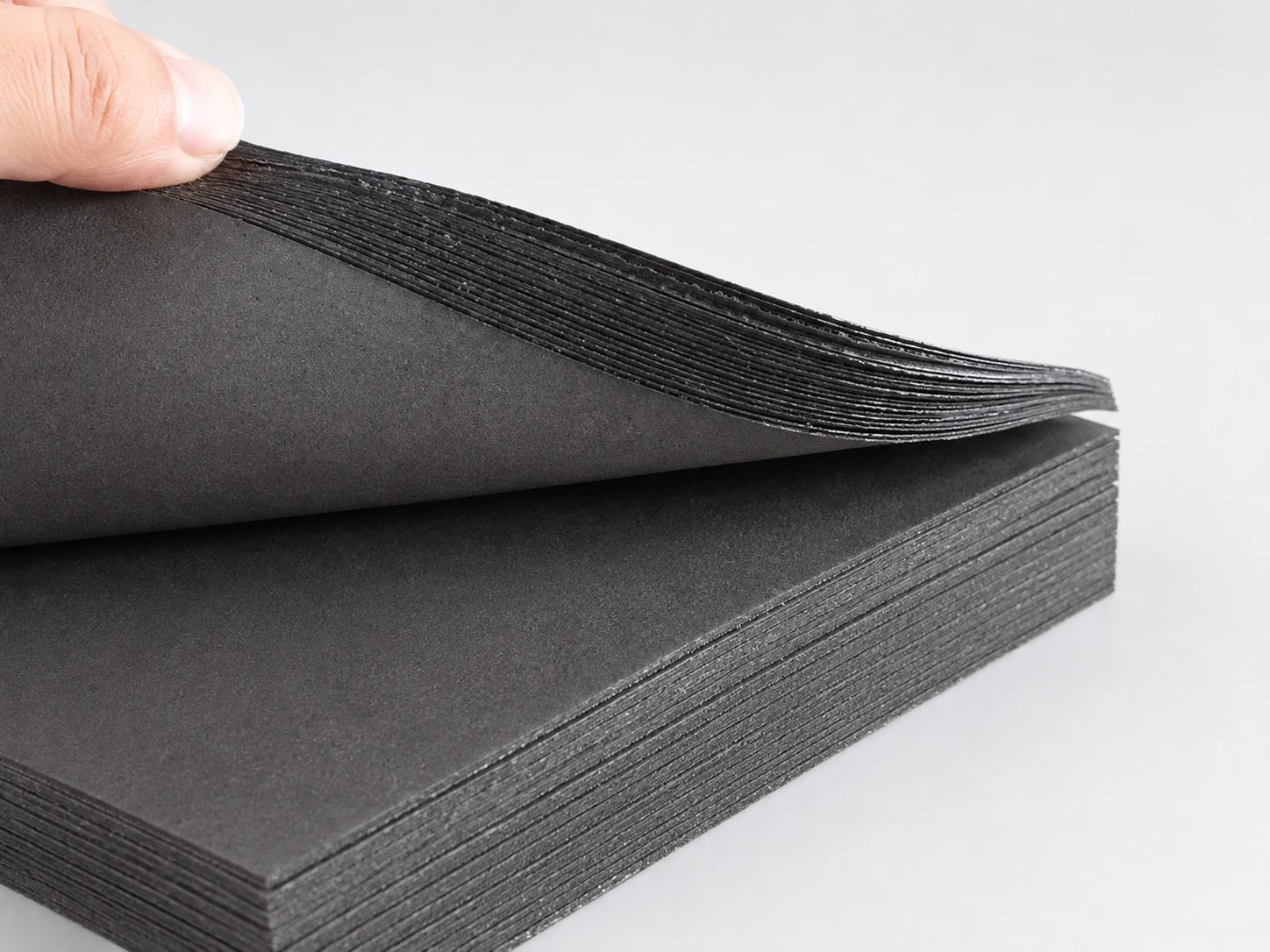
Thickness and sheet sizes for industrial gasket paper
Our industrial gasket paper product page lists a standard thickness range of 0.3–2.0 mm and several sheet formats. Examples include 500 × 500 mm, 500 × 1000 mm and 1000 × 1000 mm. Ask us to confirm the specific grade, thickness, format and quantity required for your order.
We record nominal uncompressed thickness and tolerance separately. A used gasket may be compressed or affected by service, so its measured thickness is not necessarily the original sheet specification. If sending a sample, say whether it is unused stock or a removed component.
For a cut profile, provide the outside shape, holes, openings and drawing revision. For sheets or rolls, provide the stock dimensions and quantity unit. Our gasket paper thickness guide explains measurement and tolerance questions without replacing the approved equipment requirement.
How should temperature resistance be assessed?
Temperature is a grade-and-application question. Our product table lists typical temperature figures up to 150°C for the non-vulcanized type and up to 200°C for the vulcanized type. These figures are not a blanket approval for every pressure, fluid, exposure time or finished construction. Ask for confirmation against the selected grade and actual duty.
| Application information | What we need from you |
|---|---|
| Medium | Exact fluid and relevant concentration or additives |
| Temperature | Normal, maximum and any heating or cooling cycle |
| Pressure | Actual operating requirement for the joint |
| Joint reference | Equipment drawing or approved part specification |
| Cleaning | Chemicals and conditions the material may encounter |
| Documentation | Requested grade identification and inspection records |
We do not assign a universal pressure rating to a paper sheet based on its temperature figure. Nor do we assume that oil resistance establishes suitability for every fuel, chemical or cleaning agent. Where the existing grade is unknown, identify that uncertainty and have the responsible equipment team review any proposed alternative.
Choose sheets, rolls or finished gaskets
For converters with their own cutting process, the inquiry may be for stock material. For equipment buyers or maintenance teams, the required item may be a finished gasket. We keep these scopes explicit because a unit price per sheet and a unit price per finished piece are different offers.
- Sheet order: grade, length, width, thickness, tolerance and sheet count.
- Roll order: grade, width, length, thickness and number of rolls.
- Finished parts: grade, thickness, dimensioned profile and pieces per drawing.
- Composite parts: approved layer construction, finished dimensions and piece quantity.
If you need sample approval, define whether it covers material identity, thickness, profile, fit or an agreed combination of checks. A small raw-material sample does not prove acceptance of a finished geometry. Our cut gaskets and full-sheet guide explains that supply decision.

Send an industrial gasket paper quotation request
We suggest sending the approved material reference, type, thickness and tolerance, supply form, dimensions, quantity and destination in one inquiry. Add medium, temperature, pressure and the equipment drawing. This gives us a defined basis for reviewing the requested supply and helps you compare offers consistently.
For repeat orders, retain the accepted material reference and drawing revision. If changing a grade, thickness or laminate construction, label the change. Do not describe a revised part as “same paper” when the requirement has changed. We can review a clearly identified repeat or alternative configuration more reliably.
Frequently asked questions
Is gasket paper the same as every gasket sheet? No. Our fiber-and-latex paper is one material family. Other sheets can have different compositions and service requirements; see gasket paper and gasket sheet differences.
Is thicker paper always better? We follow the approved joint specification. A thickness change needs review rather than being treated as a universal leak repair.
Can KUNYO supply custom cuts or formats? Send the grade, dimensions or drawing, tolerances and quantity. We can review the requested shape or stock format and confirm the offered scope.
Request an industrial gasket paper quotation from KUNYO. Send your grade or existing material reference, thickness, supply form, drawing, operating conditions, quantity and destination. Email sales@kunyoindustrial.com, send your inquiry online or contact us on WhatsApp. We can review the requested configuration and confirm the proposed supply scope.