
A bubble that centers correctly can still be the wrong type for your product. When we compare circular vs tubular level vials, we start with the direction you need to check. A round bullseye vial and a tubular vial do not present the same leveling information or fit into the same mounting space.
Our quick answer: circular vials indicate tilt across a horizontal plane, while tubular vials mainly indicate alignment along their intended measuring direction. At KUNYO, we review the shape, sensitivity, mounting reference and viewing task together so an OEM quotation describes a defined component rather than a generic “spirit bubble.”
1. Circular vs tubular level vials: which direction matters?
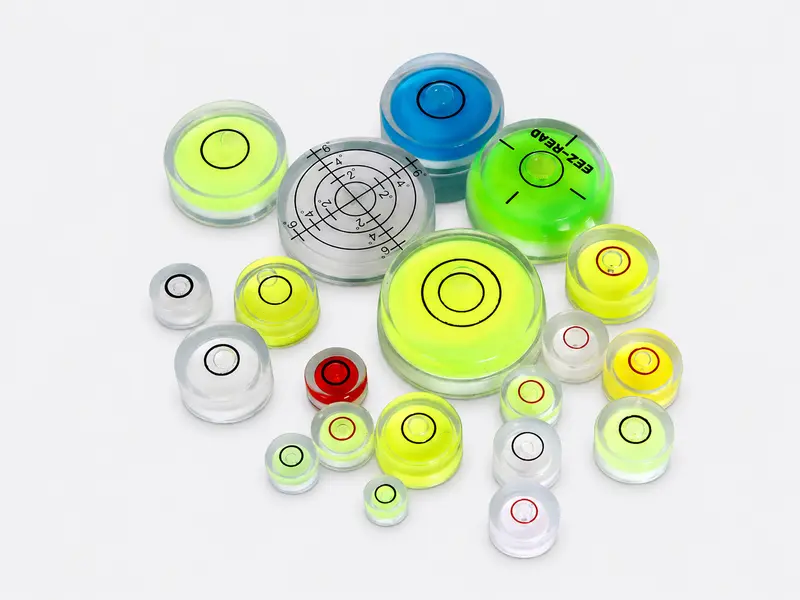
For a circular vial, the bubble is read against a reference circle. This can support checking horizontal alignment in different directions across the plane. For a tubular vial, the bubble is read against reference lines along the defined measuring direction. We ask which equipment reference surface each indication must represent.
If a tool needs separate horizontal, vertical or angled checks, show those directions on the equipment drawing. Do not assume that rotating or relocating a loose vial produces the intended calibrated reference. Identify each required orientation and whether the component is a loose vial or a complete mounted assembly.
| Selection point | Circular vial | Tubular vial |
|---|---|---|
| Typical indication | Tilt across a horizontal plane | Alignment along a defined direction |
| Visual reference | Circle or concentric circles | Reference lines or divisions |
| Main body dimensions | Diameter and height | Length and diameter or block dimensions |
| Mounting information | Base, flange, pocket or housing | Pocket, holder, block or other support |
| Performance callout | Sensitivity and separate acceptance requirement | Sensitivity and separate acceptance requirement |
2. Compare the real mounting envelope
Our circular level vial range includes glass and acrylic bodies in different diameters and heights. We need the full body profile, not just the top-view diameter. A shoulder, bottom tip or flange can affect how the part sits in the equipment.
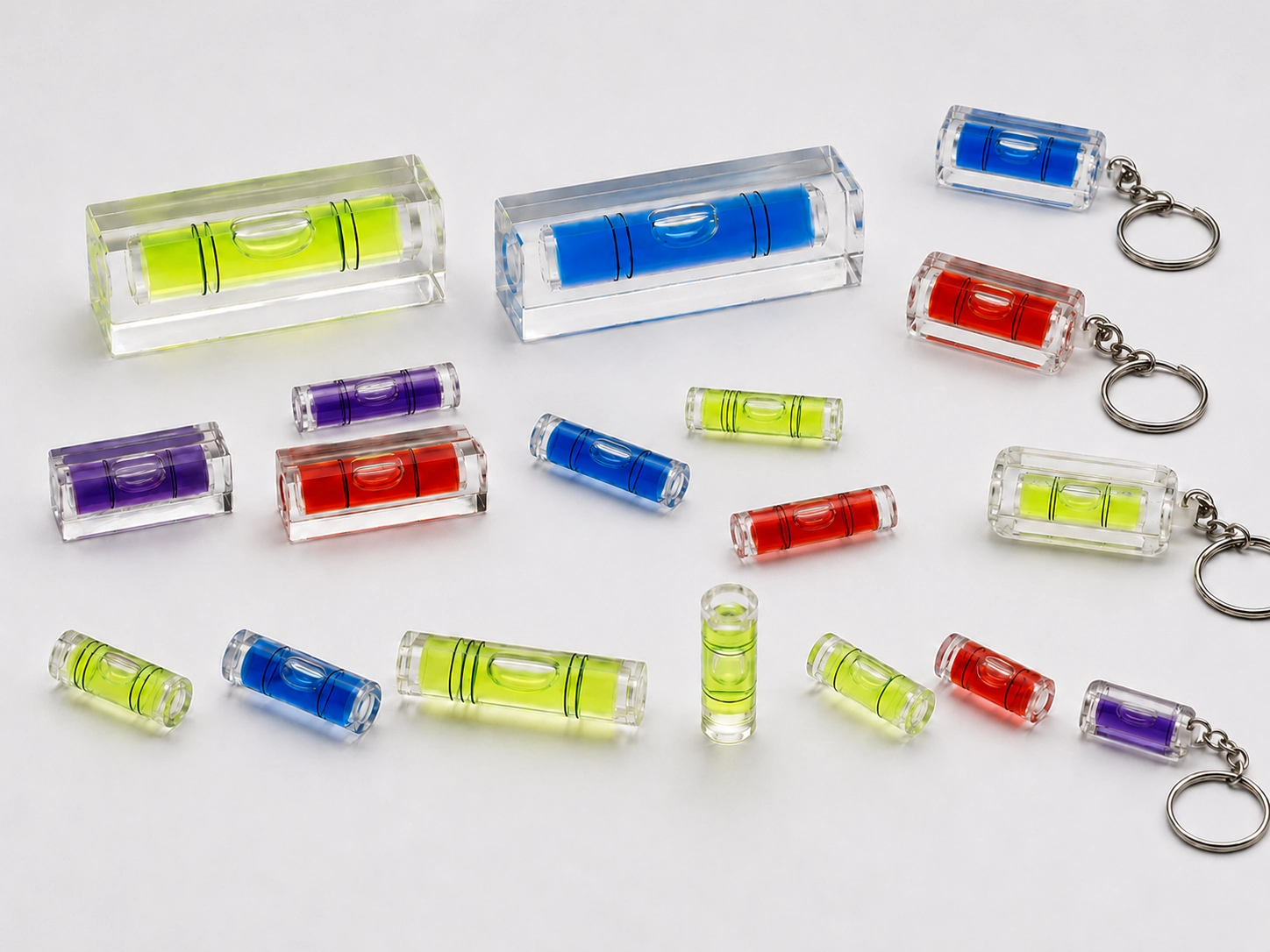
Our tubular level vial range includes cylindrical, curved and rectangular block designs. A rectangular outside body can contain an internally curved bubble chamber. We therefore keep the external mounting shape separate from the internal measuring behavior when reviewing the drawing.
For circular vs tubular level vials, include available depth, surrounding clearance and any mounting holes. If a housing is supplied, identify whether its dimensions are part of the requested component or part of your own equipment. That distinction changes the quotation scope and the sample fit check.
3. Circular vs tubular level vials need a sensitivity specification
Shape alone does not define the response you need. State the required sensitivity with its complete angle or gradient notation and the bubble-travel or division reference. A bare number copied from a catalogue is incomplete if purchasing loses the unit or movement basis.
We also ask for the finished device’s indication accuracy and acceptance method separately. A sensitive vial can still be installed at an offset from the intended reference surface. Our sensitivity and accuracy comparison explains why response, alignment and the finished-tool requirement should be recorded as distinct items.
The manufacturer Level Developments offers several circular vial and mounted-level formats. Its range illustrates that a shape name is only the start of selection. Compare the specified dimensions, sensitivity and mounting design rather than assuming all bullseye vials have the same performance.
4. Check readability and the reference after mounting
We request the normal viewing direction, reference markings, bubble size and liquid color. A vial that is easy to inspect on a bench may be partly hidden by the equipment housing. Show the viewing opening or cover on the drawing when it limits what the operator can see.
The manufacturer Johnson Level describes several vial body shapes and orientation arrangements. For an OEM part, we turn that general distinction into a specific question: what must the operator check, from which position, and against which reference?
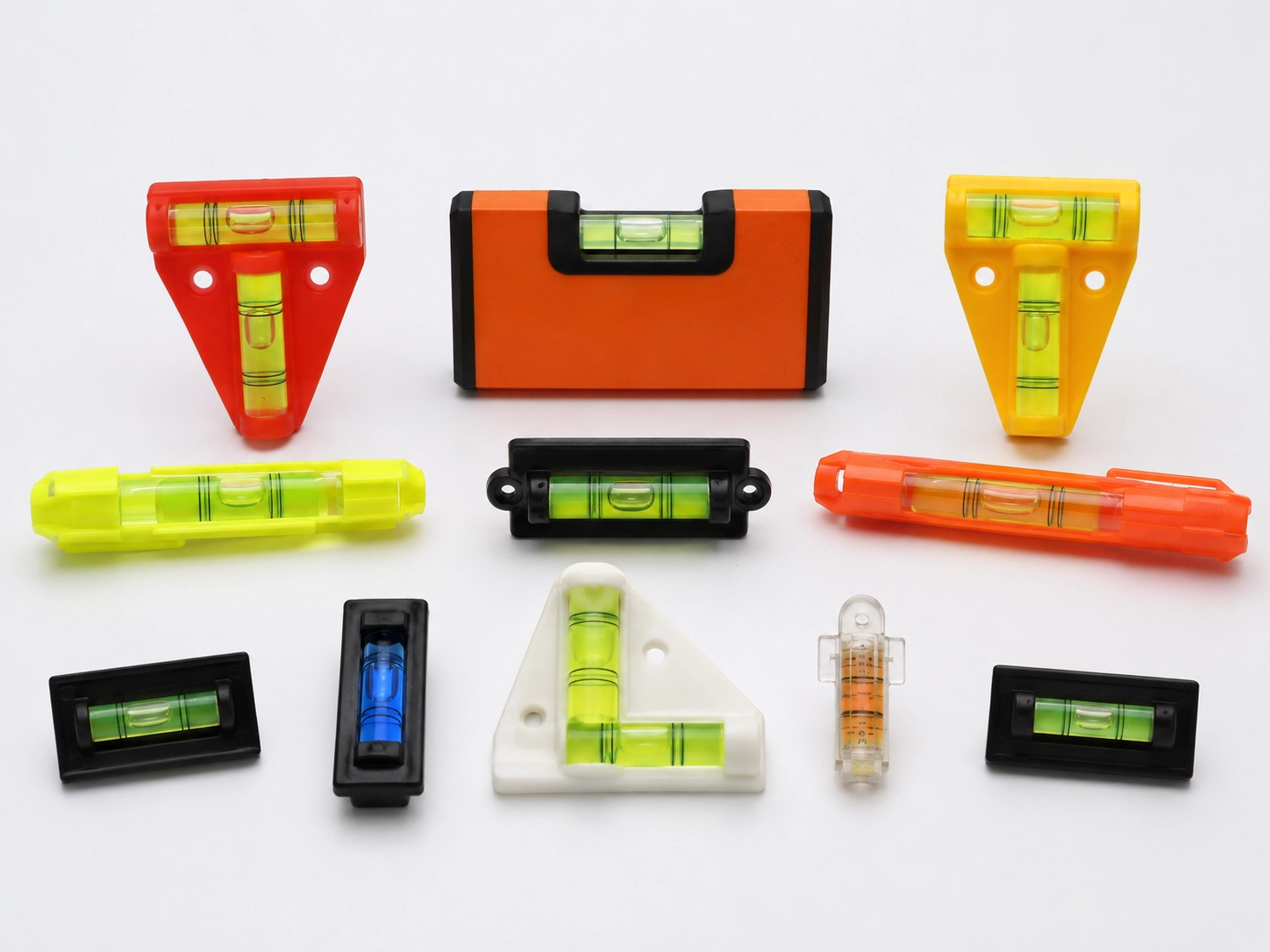
If you want a ready-to-mount component, review our mounted level vial options. We list screw-on, flange, recessed and adhesive-backed arrangements. The final assembly still needs an agreed alignment reference and acceptance procedure; a housing description alone does not establish finished-equipment accuracy.
5. Request a circular vs tubular level vials comparison quote
For a genuine comparison, send the same application drawing and performance requirement for both formats. Ask us to identify which dimensions and mounting arrangements differ. This helps purchasing compare complete configurations instead of two unrelated catalogue pictures with different supply scopes.
- Application and the required measuring directions.
- Loose vial or mounted assembly requirement.
- Available mounting dimensions, body profile and installation reference.
- Glass or acrylic preference, if already approved.
- Sensitivity with full units and a separate accuracy requirement.
- Bubble size, reference markings, liquid color and viewing conditions.
- Sample acceptance method, quantity and delivery country.
A useful inquiry might read: “Please review a circular vial and a tubular assembly against the attached equipment drawing. Confirm the proposed mounting arrangement, dimensions, sensitivity notation and requested sample scope.” Use the actual engineering values approved for your product rather than selecting a sensitivity solely by appearance.
If samples are required, separate fit, readability, response and final alignment checks. Record the accepted configuration and drawing revision before repeat orders. A general “same bubble as before” instruction may lose the orientation, housing or marking details that made the sample suitable.
Frequently asked questions
Is a circular vial always more accurate? We do not rank the shapes that way. The required direction, specified sensitivity, mounting and acceptance method determine the suitable configuration.
Can a tubular vial check more than one direction? A single vial has an intended measuring direction. If the equipment needs several checks, specify the required vial arrangement and reference orientations.
Can KUNYO review custom circular vs tubular level vials? Yes. Send the application, drawing, performance requirements and quantity so we can review the requested alternatives.
Request an OEM level vial quotation from KUNYO. Send the measuring directions, mounting drawing, sensitivity, sample requirements, quantity and destination. Email sales@kunyoindustrial.com, send your inquiry online or contact us on WhatsApp. We will review the requested specification and confirm what is included in the quotation.