
Circular level vials give an operator a quick view of tilt in more than one direction. For an OEM buyer, the useful question is what a centered bubble means once the component is installed. The answer depends on the vial, its markings and the surface that defines level for the finished instrument. This guide uses KUNYO’s catalog to show how to specify that relationship before ordering.
In this guide
What Are Circular Level Vials?
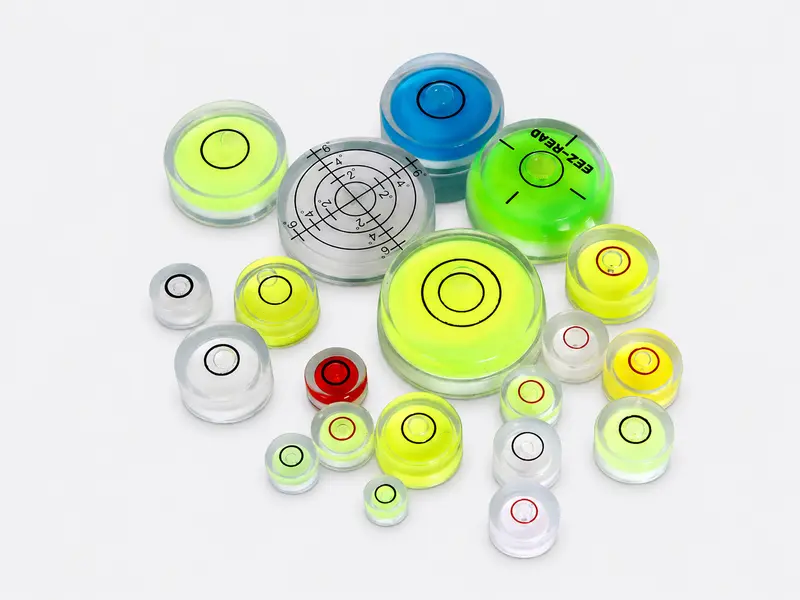
KUNYO circular level vials are round liquid-filled indicators with a bubble and circular reference markings. They are also called bullseye levels, circular bubble levels or circular spirit level vials. Their compact footprint can suit instruments and machinery where a single dial must show the direction of tilt around a nominally horizontal plane.
On a purchase drawing, identify the surface to which the indication refers. A housing may have a flat seating face, while the actual measurement on the finished equipment may refer to another surface. The part drawing and the OEM assembly drawing should show how the two are related.
How Do Circular Bubble Levels Work?
The bubble moves toward the high side beneath the curved viewing surface. A centered bubble indicates alignment with the vial’s reference, within the limitations of that component and its mounting. An off-center bubble indicates tilt and its direction. The reference ring gives a quick visual guide to centering.
Describe whether the operator must simply center the bubble or judge its offset at a defined inclination. For the latter, specify the required relationship between travel, marks and the permitted tilt. If the device must show independent readings for two selected axes, compare the KUNYO multi-axis level indicators with the intended operator task.
Common Types of Circular Level Vials
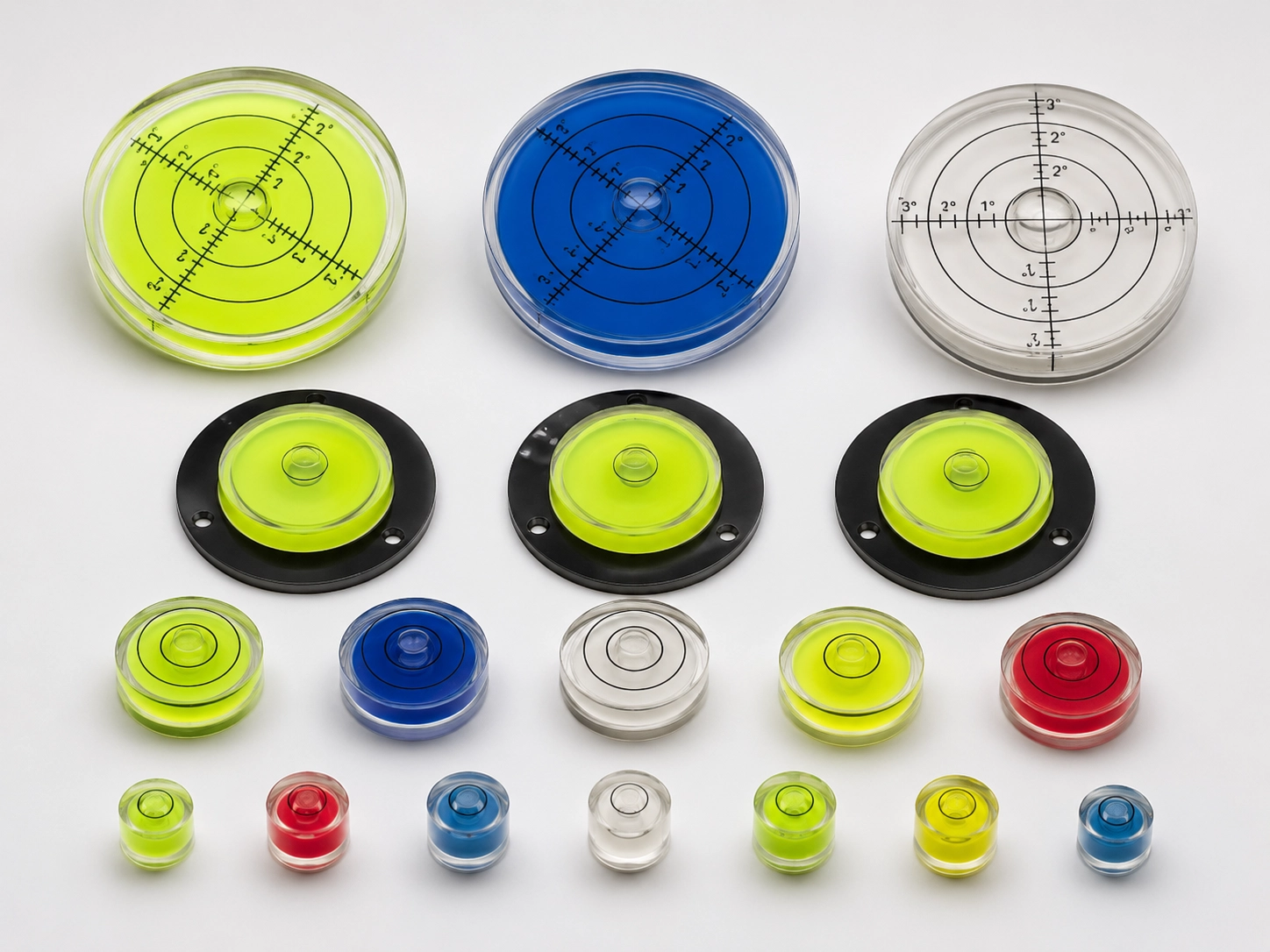
KUNYO catalogs acrylic and glass circular level vials and offers several geometries and display options. Some OEM products use the vial in a recess designed into the instrument, while others use a separate housing that mounts to the exterior. Compare the mounted level vials range when the order needs a ready-to-install assembly.
As an example of a distinct packaged form, Kales lists a metal-shell circular vial. Use the drawing for the exact offered model to confirm dimensions and mounting rather than applying another manufacturer’s specifications.
Sensitivity and Accuracy
Sensitivity states how far the bubble moves for a change in tilt, or the angle associated with a specified travel distance. KUNYO expresses its catalog sensitivity choices in minutes of arc per 2 mm of bubble movement and lists options from 5 to 90 arcminutes. In that notation, a smaller angle per fixed travel indicates a more sensitive vial. Confirm the offered value and its units for the selected model.
Accuracy is a separate requirement for the installed product. The OEM acceptance procedure should define the reference surface, allowed indication error, measurement position and readings that will be recorded. If the bubble must stay inside a ring at a specified angular tolerance, give the supplier the tolerance and viewing conditions instead of asking for a vague high-precision option.
Materials and Housing Options
KUNYO lists PMMA or glass for its circular level vials. When a housing is required, identify the desired enclosure, mounting method and exposure to cleaning products, handling or outdoor conditions. Give the dimensions for the actual space and state whether the vial will be viewed through an equipment window. Ask the supplier to confirm the material and available mounting styles for the configuration.
Include the required liquid color, bubble size and ring design if they affect readability. What can be seen on a loose sample can differ from what the operator sees after covers and adjacent components are installed. Use the normal viewing direction and actual background when reviewing the sample.
Industrial Applications
Examples in the KUNYO catalog include surveying instruments, tripods, measuring devices and machine tools. A tripod buyer may want to see the bubble from above while adjusting the legs. A manufacturer building an instrument into a housing may need it visible through a small top opening. Both use a circular bubble level, but the installation and reading conditions differ.
Tell the supplier which applications share the same part. Where the device models differ, identify the dimensions or markings that change. Use separate part references where the approved requirements are different.
OEM and Customization Options
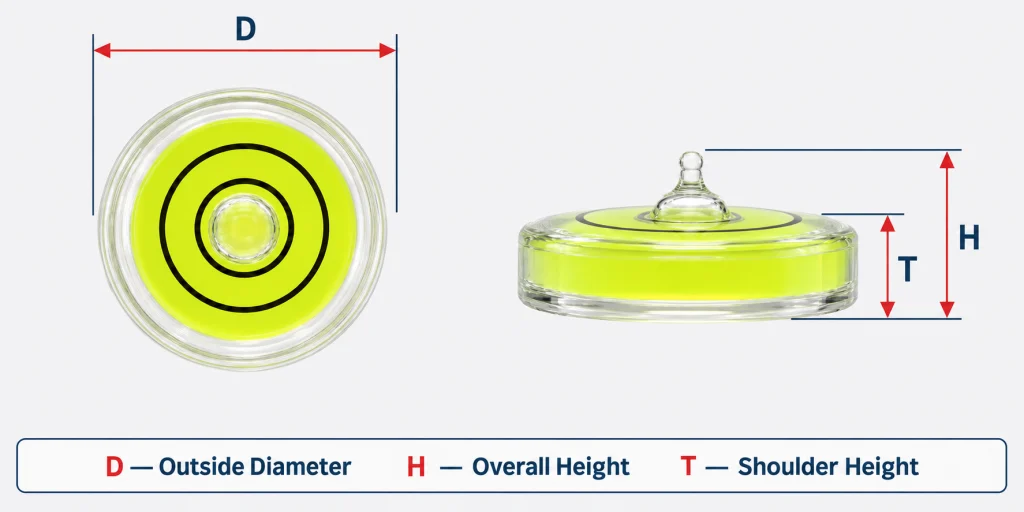
For custom circular level vials, send outside diameter, height, mounting interface, optional housing, liquid color, ring markings and target sensitivity. Give the drawing revision, quantity per variant and planned operating environment. KUNYO’s ordering FAQ explains that the project design can affect tooling, minimum quantities and lead times.
Define how the first sample will be reviewed on a representative instrument. Retain the approved drawing, sample reference and inspection record for the production order. If the quote includes several proposed variants, keep each in a separate line and record which features are still open.
| OEM field | What to specify |
|---|---|
| Form and housing | Diameter, height, mounting area and reference face |
| Sensitivity | Target angle per stated bubble movement |
| Display | Ring layout, liquid color and viewing direction |
| Acceptance | Installed reference, permitted indication error and sample approval |
How to Choose a Circular Level Vial Manufacturer
Ask the supplier to identify the offered grade, size, housing and sensitivity units in the quotation. Confirm how the sample will be labeled and which dimensions or performance checks will be included. Compare production quotations using the same drawing and acceptance requirements.
Request an OEM circular level vial quote with the drawing, mounting details, sensitivity and expected order quantity.