
An industrial oil level indicator gives an operator a local view of oil in a reservoir, gearbox or other compatible equipment. Begin by deciding whether the application needs a reading at one position or a view across a height range. Then compare the mounting interface, seal, available space and service conditions before choosing a product.
In this guide
What Is an Industrial Oil Level Indicator?
A visual indicator uses a clear window or a column to display the oil level. Confirm whether the requirement is for local visual observation or for a device with an electrical output. This guide covers visual products. For a replacement, start from the equipment model, original component reference and approved drawing. A similar-looking part can differ in connections, visibility or installation depth.
For a new design, mark the normal viewing position and expected operating levels. Ask the equipment engineer to specify the relevant mounting datum and the acceptable service conditions.
Common Types of Oil Level Indicators
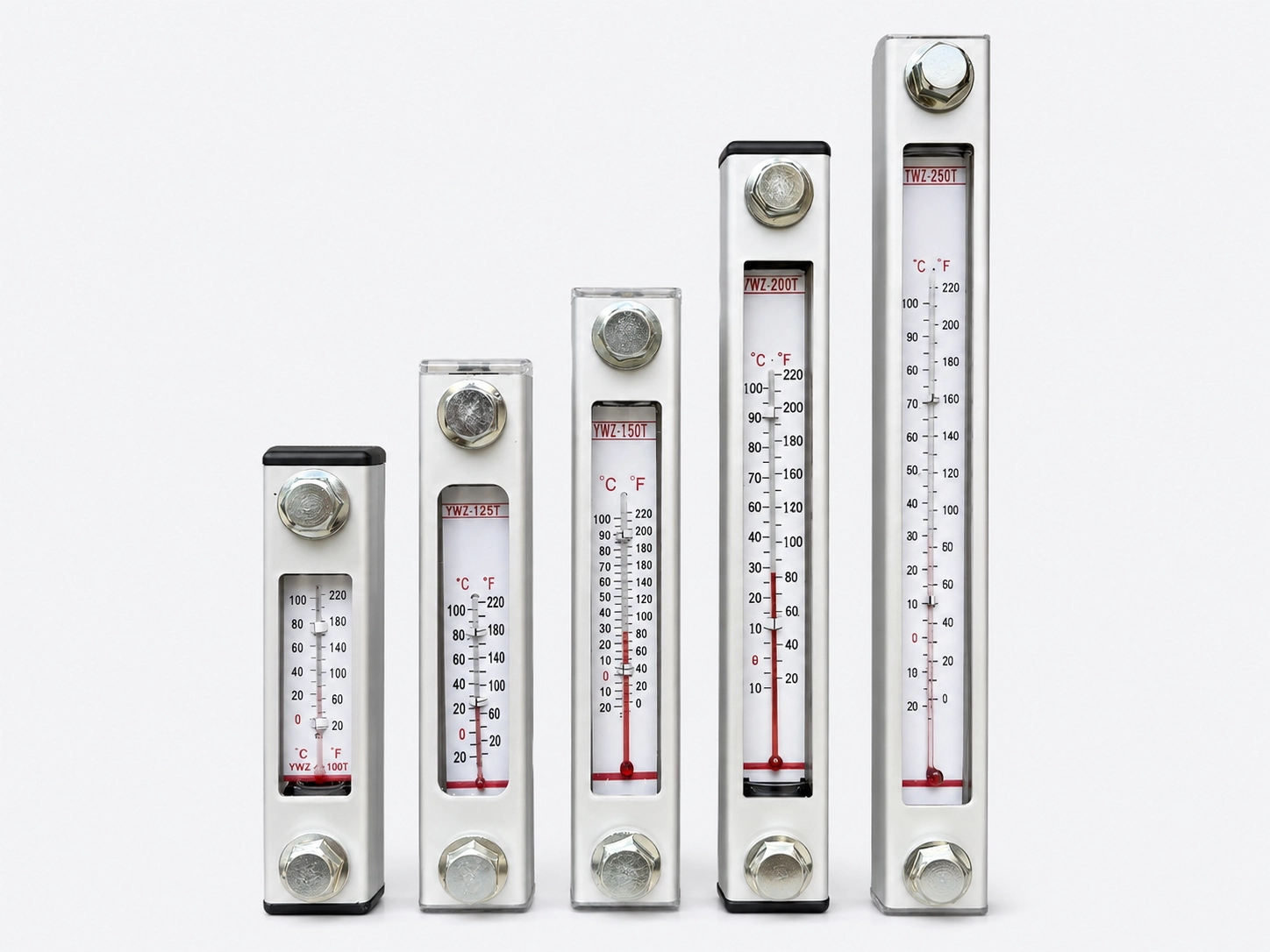
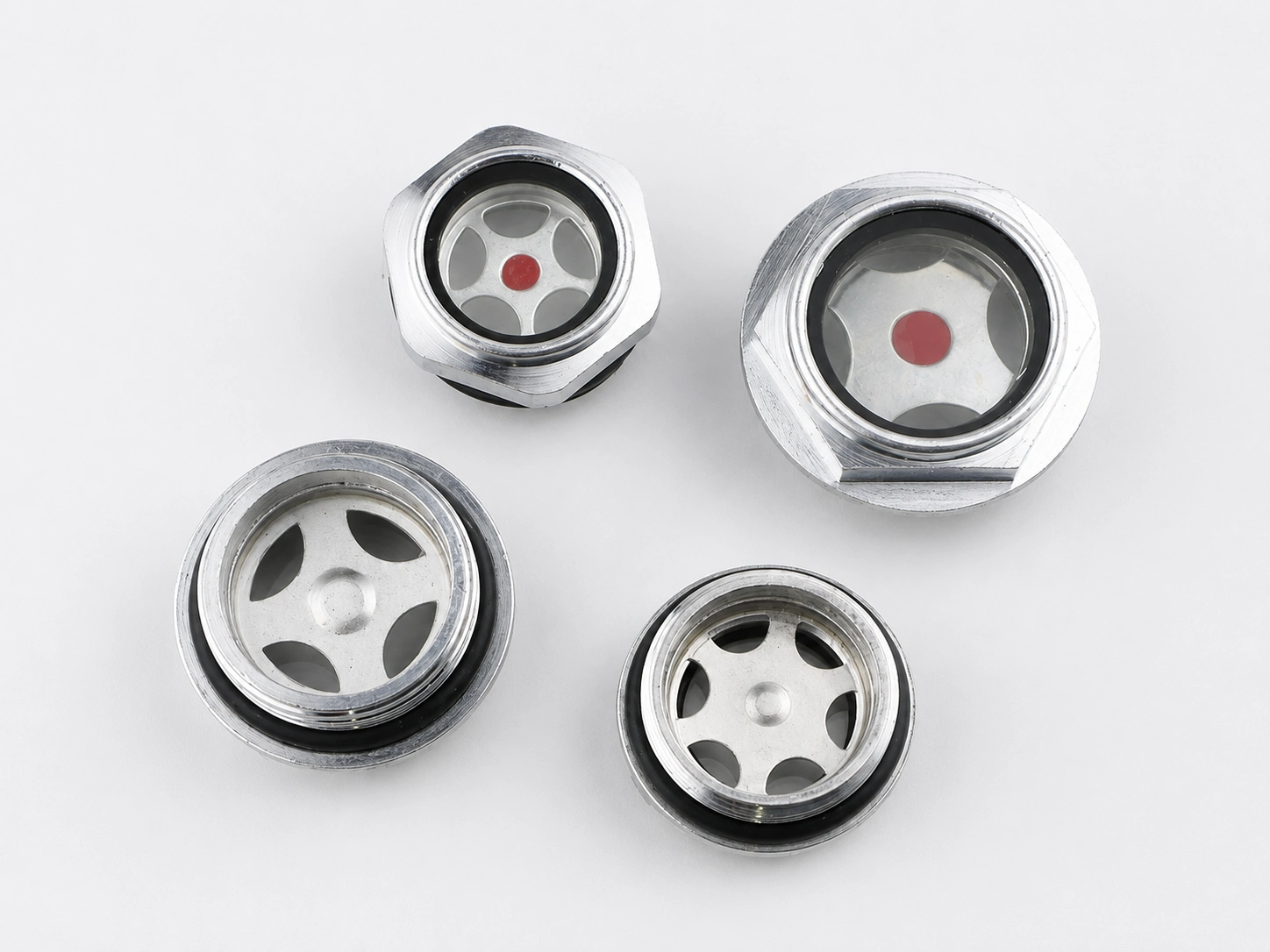
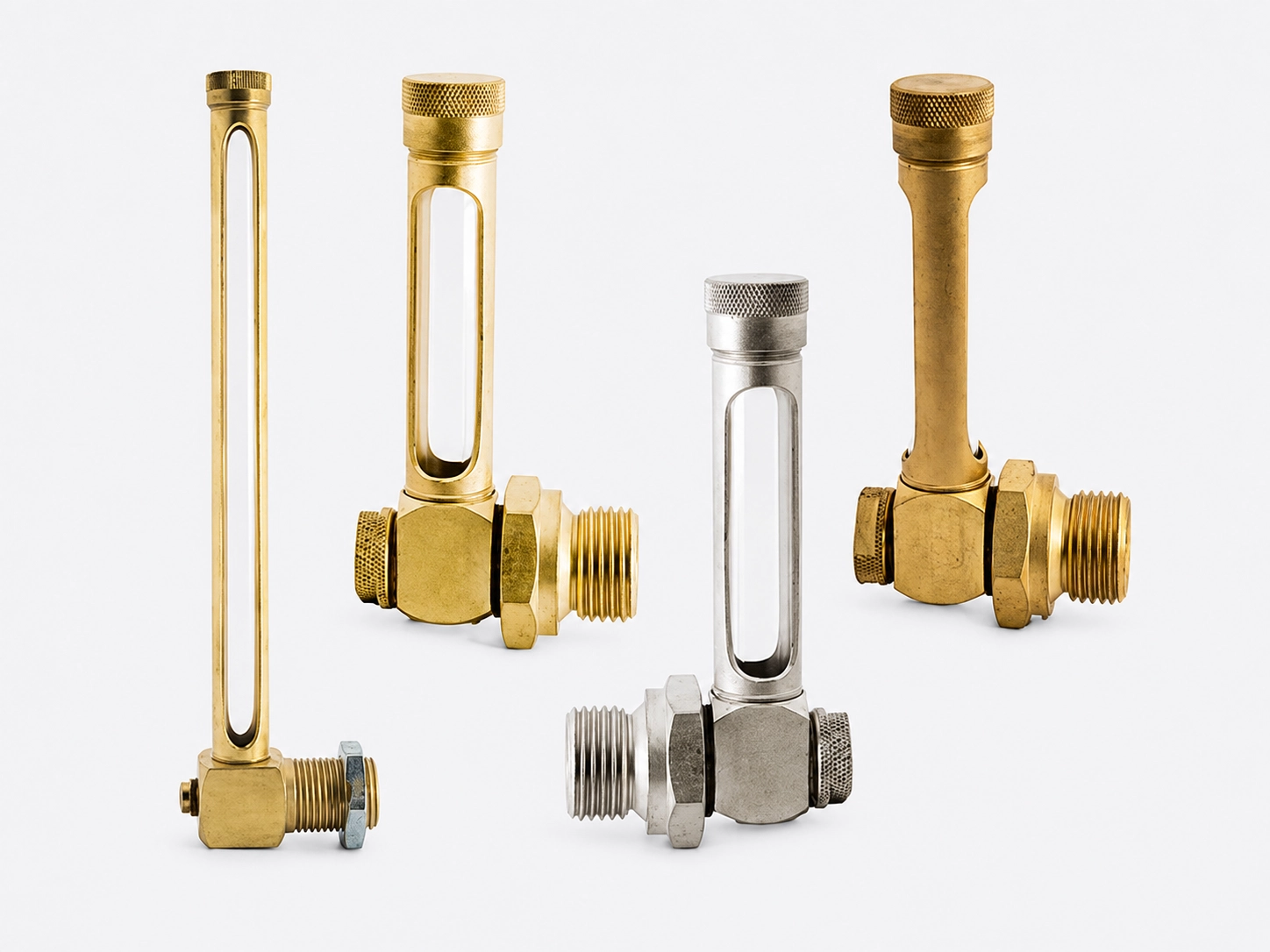
A threaded unit normally gives a local view at its port. A YWZ Oil Level Gauge or a Tubular Oil Level Indicator can show level over a vertical viewing span when used in the corresponding arrangement. Review the exact model for the window, tube or scale supplied and the available connection options.
The K0444 catalog example illustrates a separately specified gauge series. Use its model documentation only for that series. For each offer, request the drawing and conditions for the exact configuration being offered to you.
| Style | Typical viewing task | Confirm on the drawing |
|---|---|---|
| Threaded sight glass | View oil locally at a port | Thread standard, seal, window and wrench clearance |
| YWZ bolt-on gauge | View level over a span | Center spacing, mounting bolts, seals and range |
| Tubular oil level indicator | View a column through a clear tube | Connection arrangement, installed height and viewing span |
Sight Glass vs Visual Oil Level Indicator
An oil sight glass is one type of visual indicator. A compact Threaded Oil Level Sight Glass lets the operator observe the fluid locally through a window. A gauge with a vertical viewing column displays a larger interval. Product names can overlap, so specify the required usable viewing area rather than relying on the name alone.
If the operator needs to observe a range between minimum and maximum marks, show those heights on the application drawing. When the goal is a quick visual check at a fixed port, specify the local position and clear window area.
Threaded and Bolt-On Mounting Options
For a threaded industrial oil level indicator, confirm the full thread designation and approved sealing arrangement. KUNYO lists BSP, NPT and metric options for selected products. Record the exact thread from the equipment drawing and include the length and available tool clearance if they affect fit.
For a bolt-on unit, give the hole or port center spacing, fastener details and sealing-face geometry. A vertical tubular assembly may have two end connections with their own fitting requirements. Send the mounting drawing and ask the supplier to distinguish the connection spacing, overall installed height and usable viewing range.
Material and Connection Requirements
For a quoted model, identify the body, viewing material and seal separately. KUNYO’s threaded product page lists multiple material and seal options. Provide the oil type, operating temperature and pressure, and any other service conditions needed for material compatibility and assembly review.
If a proposed substitute changes the viewing window, body or seal, have the equipment owner assess the combination. Confirm limits for the complete industrial oil level indicator before ordering for the specified service.
Dimensions and Installation Considerations
A matched thread or bolt spacing can still leave clearance problems. Show the envelope around the port, the available depth and how the user will view or access the indicator. For a vertical display, include adjacent fittings or covers that might obstruct the viewing span. If a thermometer or marking is required, ask which options can be included for the selected model.
Use the original equipment installation requirements for the approved part. Specify what is included with the assembly, such as seals or fasteners, so the quote matches the installation scope.
How to Select the Right Oil Level Indicator
Compare the viewing task first, then the mounting geometry, materials and service envelope. Use separate quote lines where equipment models or connections differ. Record reason for any substituted configuration and obtain approval before the order is released. Ask the supplier to state the drawing reference and the dimensions that determine fit.
Custom Manufacturing and OEM Orders
Send the equipment drawing, connection details, fluid and service conditions, clear viewing requirements and planned quantity. For an OEM sample, state what will be checked on the installed equipment. Confirm available customization, lead time and packaging for the quoted model.
For an order containing several equipment models, give each industrial oil level indicator its own drawing reference and quantity. Ask whether the quoted assemblies include seals and fasteners and whether a sample is available for fit verification. Keep the approved drawing and configuration with the purchase order. If the design has a minimum and maximum oil line, compare both against the visible area of the installed gauge during sample review.
Request an industrial oil level indicator quote with the equipment reference, mounting dimensions and working conditions.