
A more responsive bubble does not automatically make your finished tool more accurate. When we review level vial sensitivity vs accuracy for an OEM inquiry, we ask for two separate requirements: how the bubble should respond to tilt, and how closely the assembled device must indicate the intended reference.
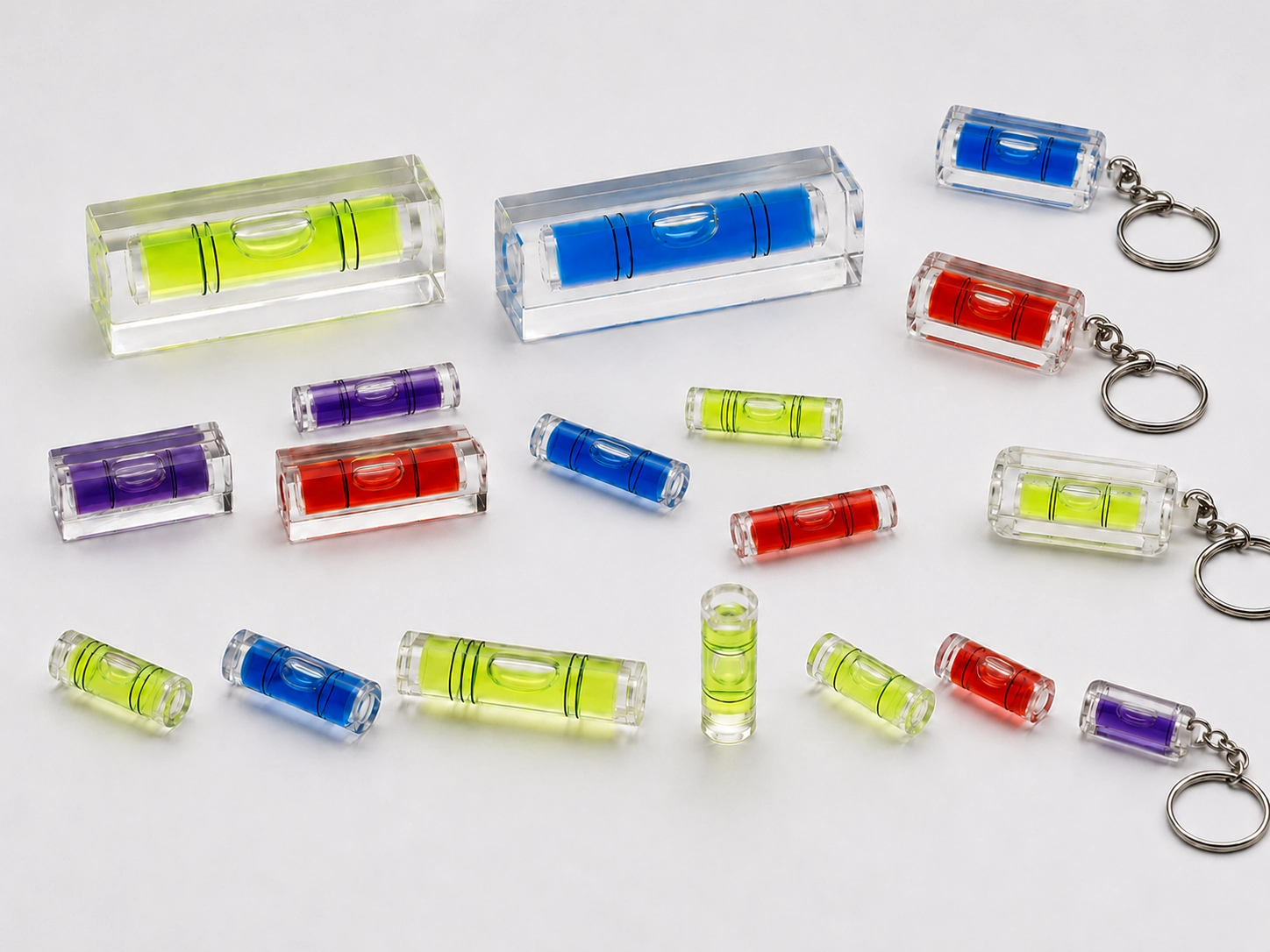
At KUNYO, we offer tubular, circular and mounted level vials with specified dimensions, markings and sensitivity options. To prepare a useful quotation, we need more than the phrase “high precision.” This guide explains the distinctions we ask buyers to resolve before choosing a vial or approving a sample.
1. Level vial sensitivity vs accuracy: what is the difference?
Sensitivity describes the tilt change needed to move the bubble by a stated distance or division. Accuracy describes how close the indication is to the intended reference under specified conditions. We record both instead of assuming that one number answers both questions.
For example, a vial can respond clearly to a small tilt while being mounted at an offset from the tool’s reference surface. The response is visible, but the assembled tool still needs alignment review. That example is a purchasing distinction, not a measured performance claim for a particular KUNYO model.
| Specification | Question it answers | What we ask you to state |
|---|---|---|
| Sensitivity | How much tilt produces the defined bubble movement? | Angle or gradient and the movement/division reference |
| Indication accuracy | How close must the result be to the intended reference? | Permissible error and test conditions |
| Mounting alignment | How is the vial related to the tool datum? | Reference surface, orientation and adjustment arrangement |
| Acceptance method | How will the finished requirement be checked? | Agreed procedure, fixture and pass criteria |
The manufacturer Level Developments defines sensitivity in terms of angle or gradient and a stated bubble movement. This helps explain why an isolated number without its movement reference is incomplete.
2. Keep the units when comparing quotations
For a level vial sensitivity vs accuracy comparison, we ask buyers to retain the complete notation. A value stated per 2 mm of bubble movement should not be shortened to just an angle. Likewise, a gradient and an accuracy tolerance need their own labels so purchasing does not compare unlike specifications.
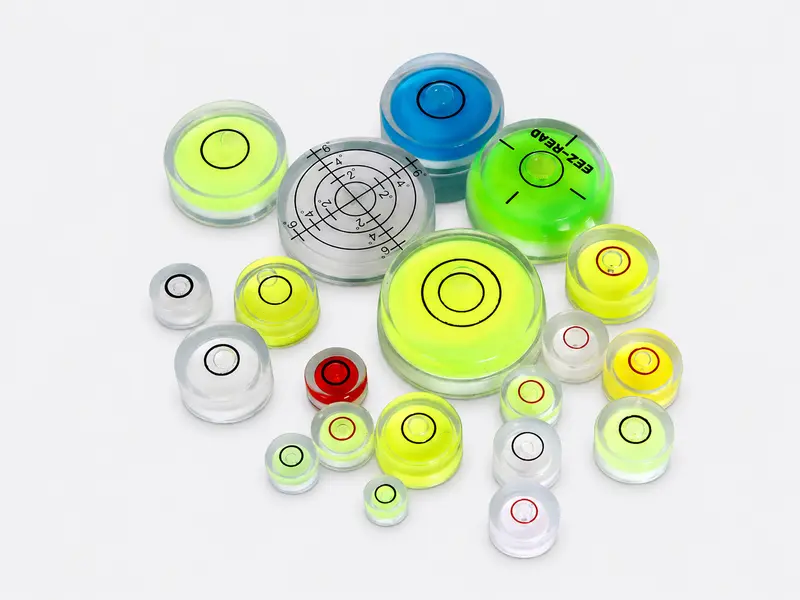
Our circular level vial page lists sensitivities with a 2 mm bubble-movement reference. For a requested model, keep that reference beside the selected value. If your drawing specifies another division spacing or notation, include the original callout rather than converting it informally in an email.
The manufacturer Johnson Level discusses vial accuracy and sensitivity as separate specifications. We use the distinction when asking you to define the finished tool requirement. A bare “mm/m” label needs context: tell us whether it describes a sensitivity reference, an error tolerance or another requirement on your drawing.
3. Level vial sensitivity vs accuracy in the finished tool
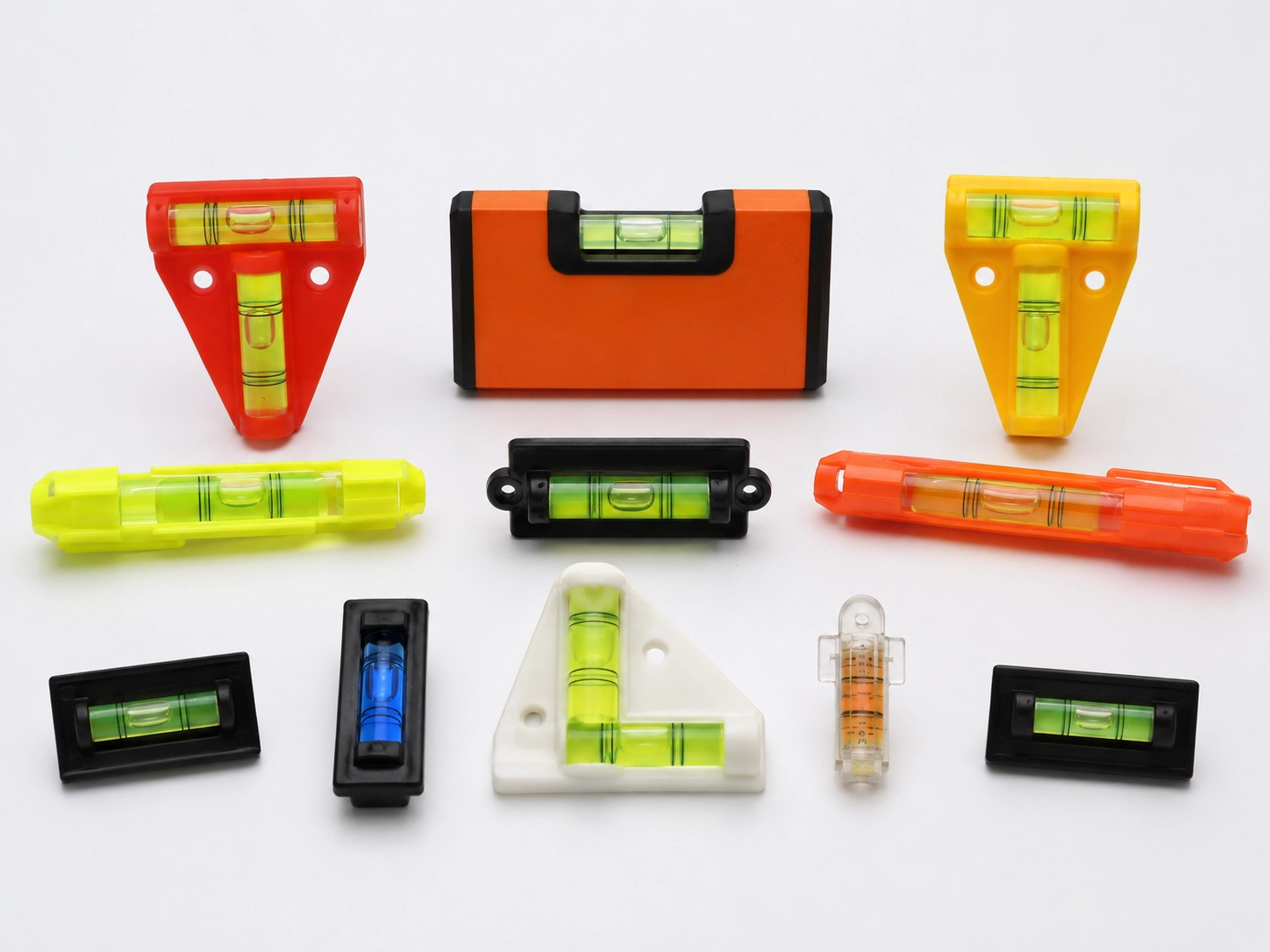
We ask whether you need a loose vial to integrate into your housing or a mounted level vial assembly. A loose component still needs an installation method and alignment reference. A housing helps define the mounting format, but the complete equipment requirement should still be reviewed on the finished assembly.
For a tubular vial, identify the intended measuring direction. For a circular vial, describe the horizontal leveling task and the intended reference circle. If several vials are used together, show their orientations on the equipment drawing rather than ordering identical-looking components without the required relationship.
Include the mounting pocket, hole pattern, available adjustment and viewing direction. Also state the expected operating environment. We can then review dimensions, housing and marking requests without inventing a tolerance for your finished product. An assembly drawing is especially useful when a vial must align with a machined reference surface.
4. Define sample acceptance before comparing price
A useful level vial sensitivity vs accuracy sample review separates physical fit, readability, response and final alignment. Agree which checks are performed on the loose vial and which are performed after installation. A visual approval of color and size alone does not confirm the finished tool’s measurement performance.
- Check overall dimensions against the agreed drawing.
- Review bubble size, liquid color and marking visibility in the intended viewing position.
- Check the specified sensitivity using an agreed reference and procedure.
- Check assembled indication against the intended tool datum.
- Record applicable temperature, orientation and other test conditions.
- Keep the accepted sample and drawing revision linked to the purchase item.
Ask your engineering or quality team to set the acceptance limits and measurement method. We do not replace that decision with a generic promise of “precision.” If a test certificate or particular inspection record is required, request it before quotation and confirm its scope for the proposed product.
5. Write a clear level vial sensitivity vs accuracy inquiry
Our tubular level vial range includes glass and acrylic designs with different body shapes and customization options. State the body type and dimensions first, then identify sensitivity, bubble length, reference markings, liquid color and the mounting arrangement. These are separate configuration details.
We suggest an inquiry structure such as: “Please quote the vial to drawing A, revision B. The required sensitivity is stated with its bubble-travel reference. The assembled device must meet the separately stated indication tolerance under the agreed acceptance method.” Fill in the engineering values approved for your actual product.
| Information to send | Why we request it |
|---|---|
| Loose vial or mounted unit | Defines the supply scope |
| Drawing and overall dimensions | Defines fit and installation space |
| Sensitivity with complete units | Defines the intended bubble response |
| Accuracy and acceptance requirements | Defines the separately requested performance review |
| Markings, bubble size and liquid color | Defines the visual configuration |
| Quantity and delivery country | Defines the quotation basis |
For production orders, keep any agreed changes visible in the drawing revision. If the housing, markings or sensitivity changes, identify that change instead of requesting an unnamed “same as before” part. We can review a defined repeat configuration more clearly than a general description of appearance.
Frequently asked questions
Does the most sensitive vial always suit my product? We start with the application requirement, available adjustment and reading task. The smallest tilt response is not automatically the most useful specification.
Does a vial specification guarantee my assembled tool accuracy? The mounting and reference relationship also need review. State the complete assembled requirement separately.
Can KUNYO review a custom vial? Yes. Send the drawing, complete sensitivity notation, mounting details, acceptance requirements, quantity and destination for review.
Ready to request an OEM level vial quotation? Send your drawing, confirmed specifications, quantity and delivery country to sales@kunyoindustrial.com. We can review the requested configuration and identify information still needed for quotation. You can also send your inquiry to KUNYO or contact us on WhatsApp.