
Multi-axis level indicators put two or more bubble vials in one housing, giving operators a convenient way to check different alignment directions. KUNYO supplies configurations for horizontal, vertical, 45-degree and custom-angle observation. The main advantage is a compact arrangement of visible references that can be built into a tool, machine or equipment accessory.
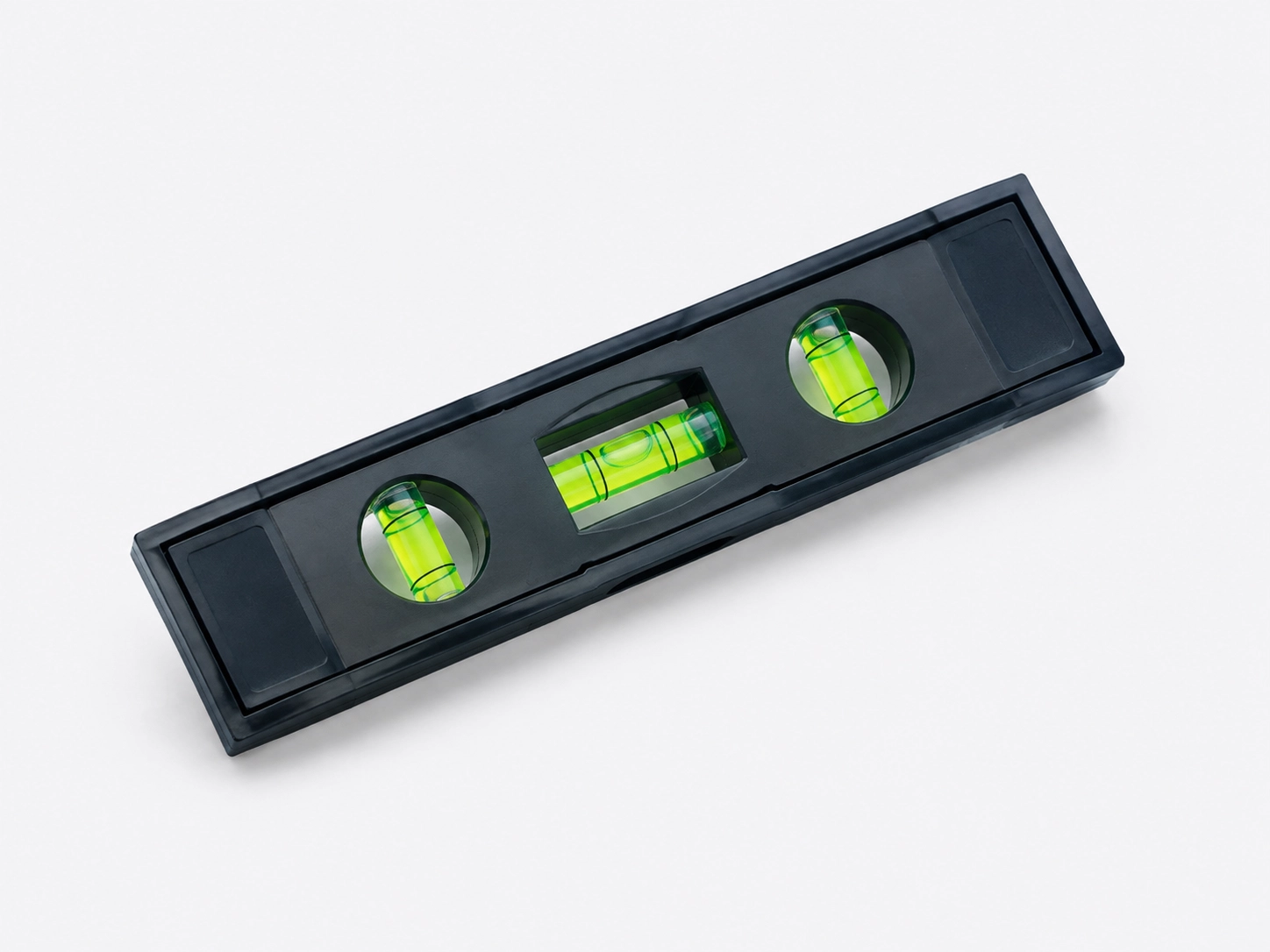
Table of Contents
For background on specifying the vial response, see the technical explanation of spirit level sensitivity from Level Developments. Read the technical reference.
1. Define the directions your operator needs
Begin with the job performed at the equipment. A frame installer may need a horizontal reference and a vertical reference, while a small machine base may need two perpendicular horizontal directions. An angled fixture may require a specific third reference. Write these directions on the assembly drawing before choosing the housing shape.
KUNYO offers cross, T-shaped and custom arrangements, along with two-axis and three-vial designs. The useful configuration follows the equipment geometry and the operator’s task. A drawing with arrows showing the required measurement directions gives the supplier a clearer specification than a request for a three-bubble level alone.
For multi-axis level indicators used on several models, identify which directions are shared and which change between models. This helps purchasing teams keep similar-looking components assigned to the correct machine. Include the equipment model and drawing revision on each request.
2. Position multi-axis level indicators for a clear view
The housing of multi-axis level indicators must leave enough space to see every vial during normal use. Check the reading position with covers, handles and nearby components in place. A vial that is visible on a loose sample can become difficult to see after the indicator is integrated into the finished assembly.
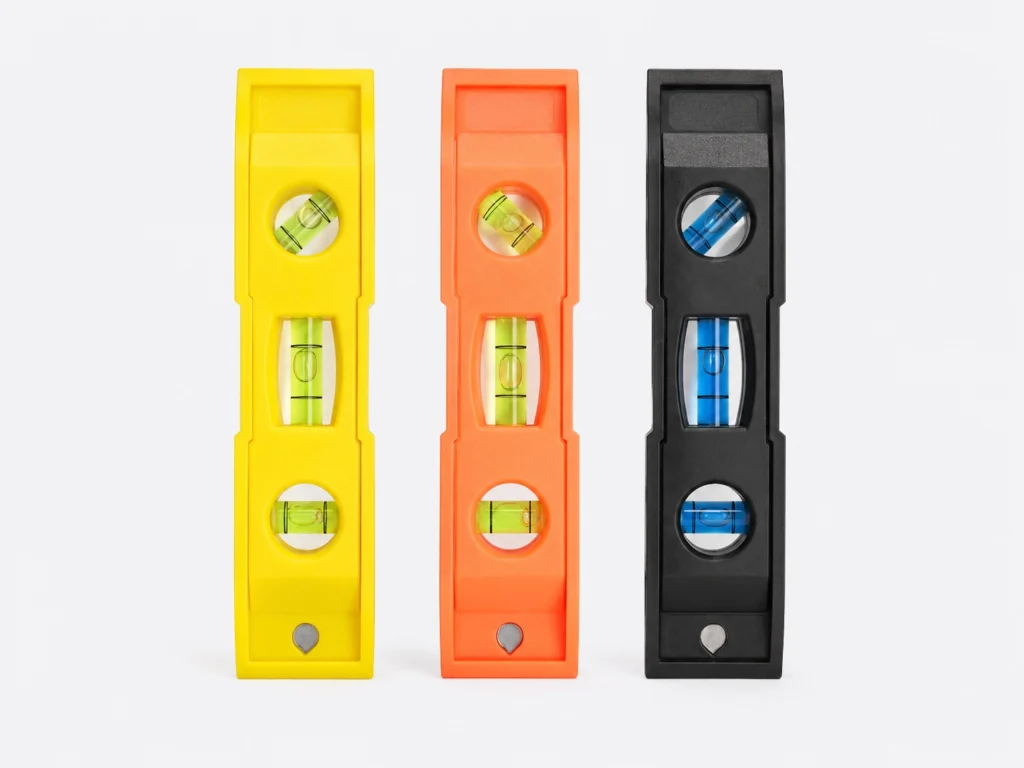
KUNYO lists high-visibility liquid, marked reference lines and transparent acrylic vials among the features of this product range. Liquid color and vial layout can be customized. Include a photograph or a simple sketch of the installed viewing position so these choices can be reviewed together.
On a sample unit, ask the intended operator to view each direction from the usual working position. Record whether a hand, tool or equipment edge blocks the line of sight. This is an installation review that can reveal a layout problem before a larger order.
3. Match the mounting method to the surface
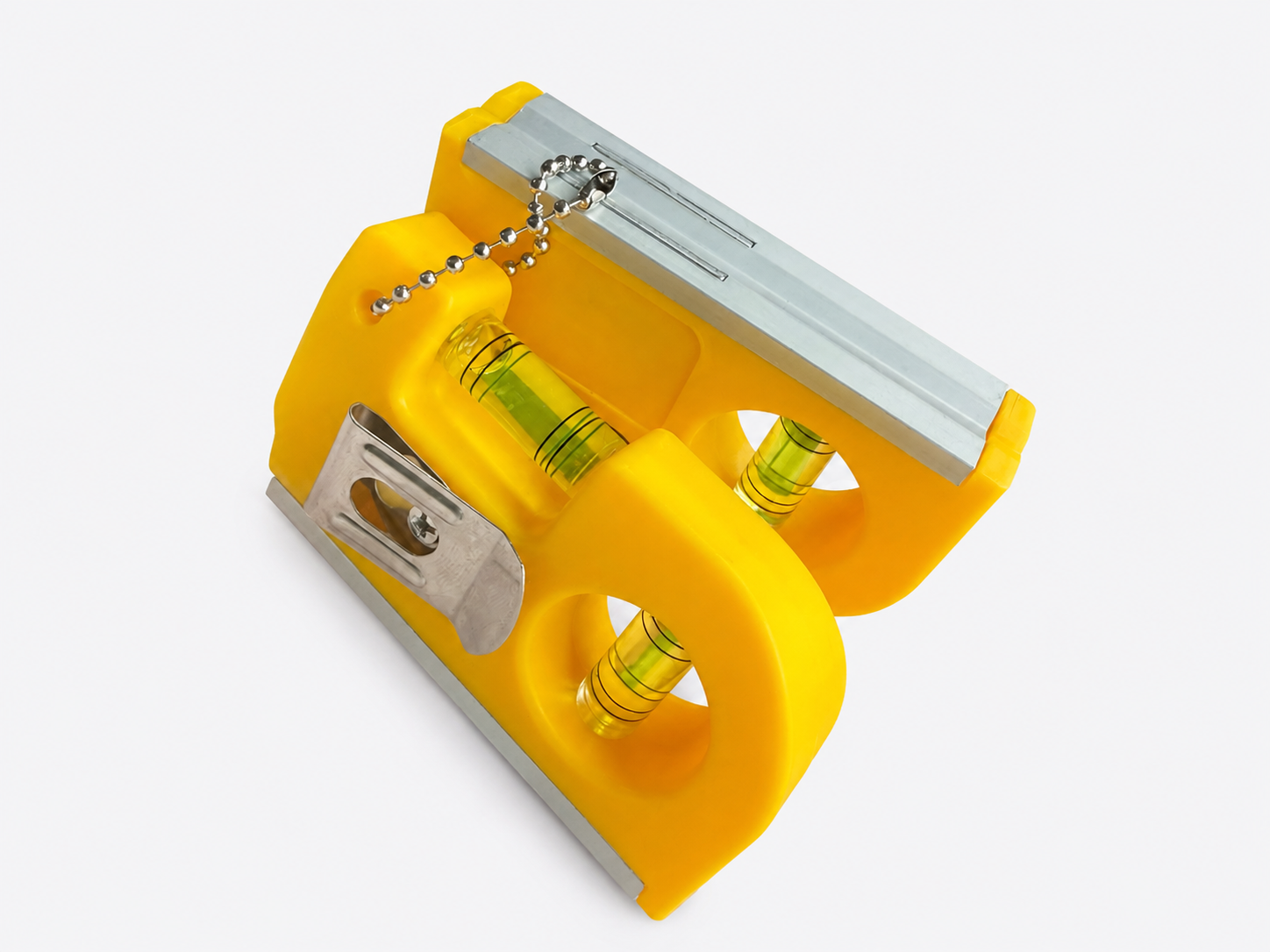
Mounting options for multi-axis level indicators include magnetic, screw-mounted, adhesive-backed, strap-mounted and freestanding designs. Magnetic versions attach to suitable steel surfaces. Folding versions can fit around posts, pipes, frames and corners, allowing adjacent faces to be used as references.
For a fixed OEM installation, specify the mounting-hole positions, available footprint and reference surface on the drawing. For a removable indicator, explain how it will be placed, removed and stored. These two uses lead to different practical requirements even if the visible vial arrangement is similar.
Compare mounting options for multi-axis level indicators using the actual equipment surface. Record its shape and material and show nearby obstructions. Ask the supplier to confirm the proposed mounting arrangement against the drawing before approving the quotation.
4. Choose the housing around the application
KUNYO supplies ABS plastic, acrylic and aluminum-alloy housing options across the range. The housing supports the vials and establishes the contact or mounting geometry. Its material, dimensions and shape should be discussed alongside handling, equipment layout and the expected working environment.
An integrated indicator may need a compact outline and dedicated mounting features. A handheld accessory may need a shape that the operator can grasp and position easily. Include these requirements in the product brief instead of leaving them to be inferred from the overall dimensions.
Confirm the exact housing material for the quoted design. The existence of several materials in a product family does not establish which one is included in a particular quotation. A clearly identified material and drawing revision make sample approval easier to document.
5. Agree on sensitivity and sample evaluation
The multi-axis level indicators range allows sensitivity to be customized. Give the supplier your required sensitivity or ask for a proposal based on the intended use. Include the reference direction and the desired reading behavior, then agree how the assembled sample will be evaluated.
Review the sample as part of the complete equipment assembly. Check that every vial can be read, the mounting features fit and the specified reference directions match the drawing. Record the review conditions and use the same approved configuration when comparing production samples.
If your design changes after approval, identify whether the change affects the housing, vial layout or mounting reference. Multi-axis level indicators should be reordered against the approved revision so a cosmetic update does not accidentally obscure an important geometric change.
6. Prepare a complete OEM inquiry
Send the supplier the overall dimensions, required measuring directions, vial layout, mounting method and housing preference. Add the desired sensitivity, liquid color, quantity and any marking or packaging requirements. Attach a drawing or sample reference and identify the equipment in which the indicator will be installed.
KUNYO states that custom dimensions and layouts can be manufactured according to customer drawings or samples. Ask the quote to identify the proposed configuration and any details still requiring confirmation. This gives engineering and purchasing a shared record for the next review.
For a broader view of available designs, see the KUNYO multi-axis level indicators product page. If your project needs a housing around a single vial, the mounted level vials range provides related mounting options.
Can one indicator show every possible angle?
The measuring directions depend on the vial arrangement. Specify the horizontal, vertical or custom angles required for the project and confirm them on the proposed drawing. A model with several vials still needs to match the directions your equipment uses.
Request a product quotation
Send KUNYO your drawing and required measuring directions to request a quotation for multi-axis level indicators. Include the installation surface and viewing position so the proposed layout can be reviewed with the mounting design.
Send your specifications to KUNYO to request a quotation.