
An EPDM rubber cone for a water gauge should not automatically be carried over to an oil application. KUNYO lists EPDM as its standard cone material for water and hot-water service, and NBR as an option for oil service. Selecting the compound and matching the cone dimensions are separate checks when buying tubular gauge seals.
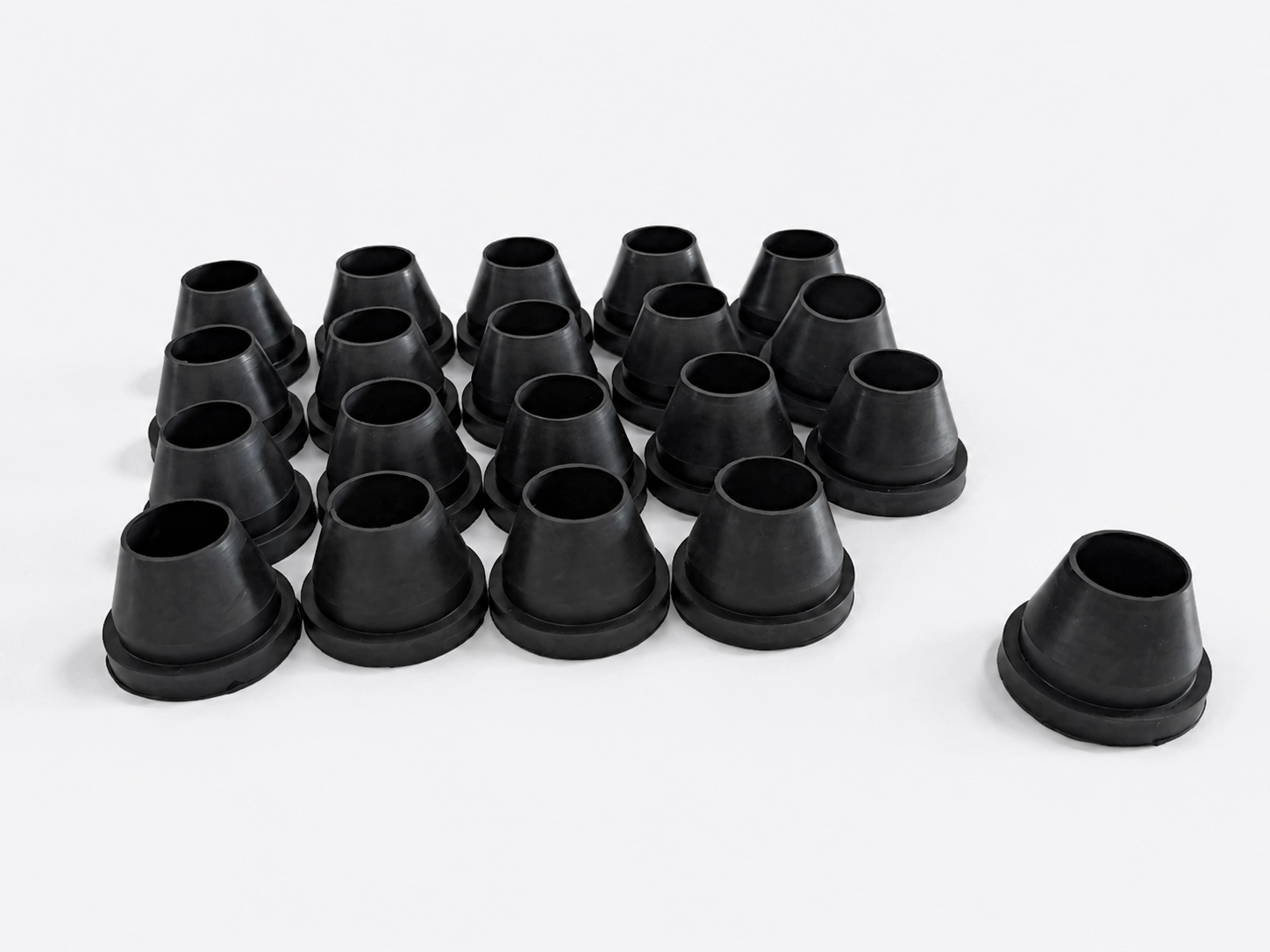
Table of Contents
1. Where does the rubber cone fit?
The cone fits around a glass tube at a gauge connection. Compression within the fitting helps form a seal, while the rubber cushions the glass against direct contact with the metal components. KUNYO lists these parts for clear, red-line and heavy-wall gauge glass tubes.
A cone is not the same component as a spindle packing sleeve or a flat gauge gasket. Before discussing material, identify the seal being replaced. Include the gauge model or a photograph of its location so the quotation relates to the correct part of the assembly.
2. EPDM rubber cone versus NBR for the medium
The KUNYO product page describes EPDM for water, hot water and general applications requiring resistance to ageing and ozone. It specifically advises against EPDM for mineral oils, fuels and hydrocarbon-based fluids. For an oil application, the listed alternative is NBR, subject to confirmation of the exact medium and conditions.
Give the supplier the fluid name rather than a broad description such as “industrial liquid.” If there are additives, mixtures or cleaning agents, identify those too. Do not select a material solely from the color or appearance of an old cone; confirm the compound from its specification or purchase records.
| Service question | What to review |
|---|---|
| Water or hot water | The listed EPDM compound and gauge requirements |
| Mineral oil or fuel | A suitable alternative such as NBR, with compatibility confirmed |
| Chemical or elevated-temperature duty | Specific compound and complete service review |
| Unknown old seal | Documentation, material identification and dimensions |
3. What about FKM or silicone?
KUNYO also lists FKM and silicone as optional compounds. Their availability does not mean that either is suitable for every temperature or chemical. Explain the working conditions and request confirmation of the particular compound offered for the application.
In particular, do not transfer the published specification of the standard EPDM cone to an optional material. A different compound needs its own temperature, compatibility and dimensional review. The approved gauge specification remains the reference for a replacement.
4. Confirm both tube size and fitting geometry
The cone must fit the tube and the gauge connection. KUNYO’s size table separates gauge mount size from suitable glass tube outside diameter. For example, RC03 and RC04 are both listed for a 1/2-inch tube range, but use different mount sizes and cone dimensions. Tube diameter alone therefore does not identify the cone.
Use the dimensional diagram to communicate the complete profile. Compare the relevant diameters, height and other indicated dimensions with the fitting or original specification. A worn, swollen or compressed seal may no longer have its original shape, so confirm measurements against documentation where possible.

5. Confirm the complete operating specification
KUNYO states that the pressure rating is determined by the complete level-gauge assembly. The glass tube, fittings, cone material and operating temperature all belong in that review. Do not infer an assembly rating from the cone material alone or apply a short-term material temperature as a continuous rating.
For material background, the Parker O-Ring Handbook provides general elastomer reference information. It is not a gauge-cone installation guide or approval for a particular compound. Confirm the supplied cone against the actual gauge requirements.
Request the right rubber cone for your gauge
- Gauge model, fitting details and original part number.
- Glass tube outside diameter and complete cone dimensions.
- Requested compound, if the equipment specification identifies it.
- Medium, temperature, pressure and cleaning conditions.
- Quantity and any drawing or sample available.
Review the rubber cone packing product page for the listed compounds and sizes. If the tube also needs replacement, supply its specification separately rather than assuming it is included.
Send your requirements, quantity and delivery destination to sales@kunyoindustrial.com, or contact KUNYO for a product review and quotation. Confirm availability, sample arrangements and the final specification before ordering.